
AI in Textile Manufacturing: How Artificial Intelligence Is Transforming the Industry. The global textile industry is experiencing a major technological transformation. For decades, textile manufacturing has depended on traditional machinery, skilled workers, and manual quality inspection. Today, artificial intelligence (AI) is introducing new ways to improve production efficiency, reduce manufacturing costs,s and deliver more consistent product quality.
From spinning and weaving to dyeing, finishing,g and garment production, AI-powered technologies are creating opportunities for textile manufacturers worldwide. Companies in the United States and Europe are increasingly exploring smart manufacturing systems, machine learning, robotics, and automated inspection to improve their operations.
Artificial intelligence is no longer just a concept for the future. It is becoming a practical tool for modern textile businesses.
But how exactly does AI work in textile manufacturing, and what opportunities does it create for manufacturers, fashion brands and textile suppliers?
What Is AI in Textile Manufacturing?
Artificial intelligence in textile manufacturing refers to using computer systems and intelligent algorithms to analyze production information, recognize patterns, make predictions, and support manufacturing decisions.
These systems can collect information from cameras, sensors, production machinery and business software. AI algorithms then analyze the information to identify problems, improve processes and help manufacturers make better decisions.
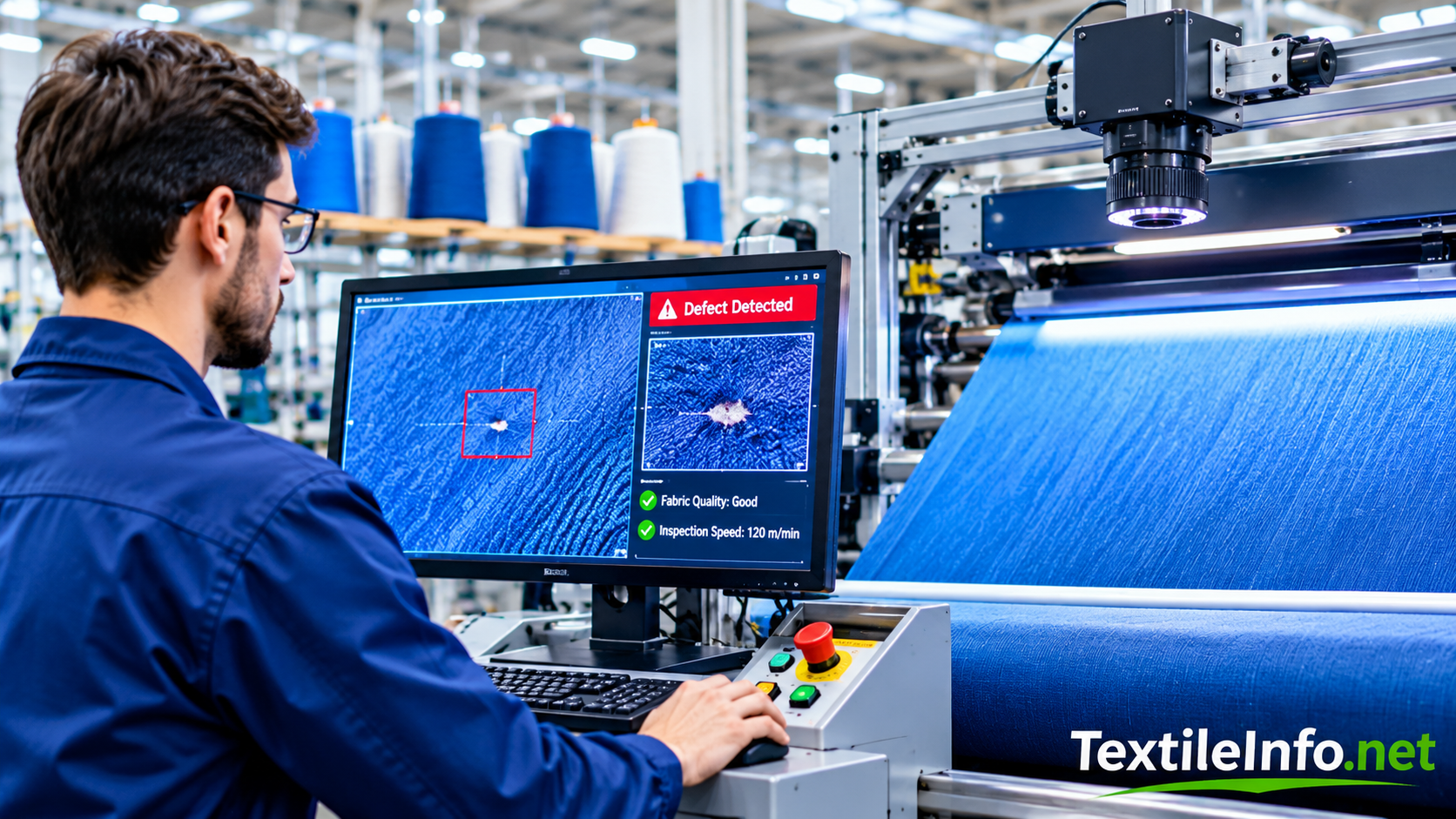
For example, an AI-powered fabric inspection system can examine thousands of metres of fabric and identify defects such as holes, stains, broken yarns and weaving irregularities.
Similarly, predictive maintenance software can analyze machine performance and identify unusual operating patterns that may indicate a future equipment failure.
The main objective is to make textile production more efficient, consistent, responsive, and resource-conscious.
7 Major Applications of AI in Textile Manufacturing
Artificial intelligence can support different stages of textile production. Here are seven important applications transforming the industry.
1. AI-Powered Fabric Quality Inspection
https://textileinfo.net/sustainable-textiles-eco-friendly-fabrics-future/Fabric quality is one of the most important factors in textile manufacturing. Traditionally, inspectors examine fabric surfaces manually to identify defects before materials move to the next production stage.
This process requires experience, concentration, and considerable time.
AI-powered visual inspection systems use cameras, image processing, and machine learning to examine fabric automatically. They can recognize different types of defects, including:
- Fabric holes and tears
- Broken yarns
- Stains and discoloration
- Weaving and knitting defects
- Uneven fabric surfaces
- Printing irregularities
These systems can inspect materials continuously and flag suspicious areas for further examination.
For textile manufacturers, automated inspection can improve consistency, reduce avoidable quality problems, and help limit material waste.
2. Predictive Maintenance of Textile Machinery
Unexpected machine breakdowns can interrupt production schedules and increase manufacturing expenses.
Predictive maintenance uses AI to analyze information collected from industrial equipment. Sensors may monitor vibration, temperature, pressure, motor performance, and other operating conditions.
By studying these patterns, AI systems can identify signs of abnormal machine behaviour before a serious failure occurs.
This technology can be applied to:
- Spinning machines
- Weaving looms
- Knitting machines
- Dyeing equipment
- Industrial sewing machines
- Textile finishing machinery
Instead of relying entirely on fixed maintenance schedules, manufacturers can use machine data to plan servicing more effectively.
The result can be fewer unexpected interruptions, better equipment utilization, and improved production planning.
3. Smart Textile Factories and Automation
A smart textile factory connects machinery, sensors, production software, and automated systems to create a more coordinated manufacturing environment.
AI can help factories analyze production information and identify opportunities to improve operations.
For example, an intelligent production system can monitor machine performance, identify production delays, and provide information about manufacturing efficiency.
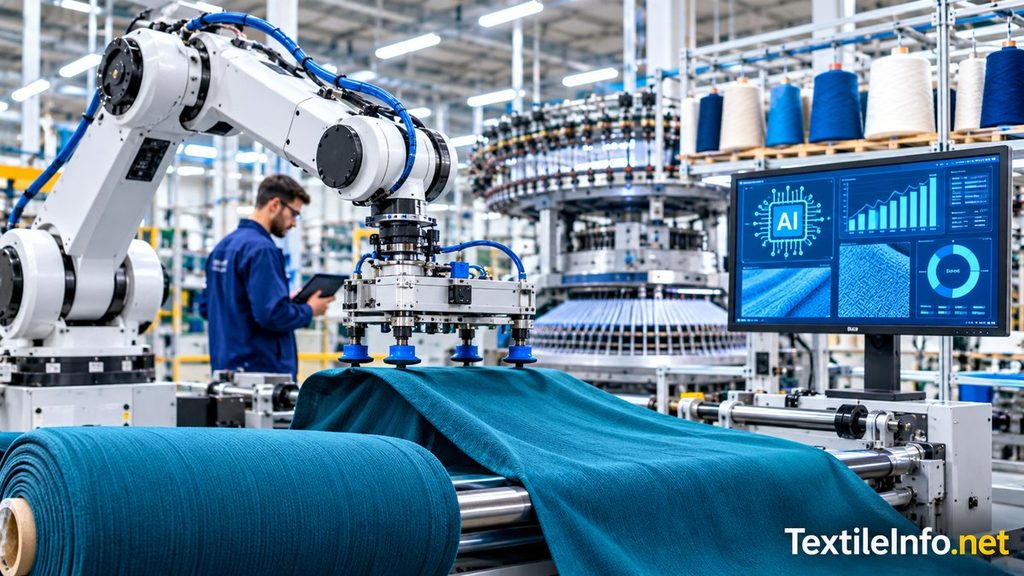
Robotics and automated material-handling systems can also support repetitive activities, such as moving materials, handling fabric rolls, and transferring components between production stations.
These technologies allow factory managers to monitor production more closely and make decisions using real-time information.
4. AI in Textile Design and Product Development
Artificial intelligence is also changing how textile products are designed.
AI-assisted design tools can analyze colours, patterns, customer preferences, and fashion trends. Designers can use these systems to explore new fabric patterns, print concepts, and product variations.
In product development, AI can support:
- Digital fabric pattern development
- Colour and print experimentation
- Trend analysis
- Material selection
- Product visualization
- Design optimization
Some advanced digital workflows also combine AI with 3D design and fabric simulation.
This can help fashion brands and textile manufacturers explore ideas before committing resources to physical samples.
However, professional designers remain essential for evaluating appearance, texture, comfort, durability, and commercial suitability.
5. AI in Textile Dyeing and Finishing
Dyeing and finishing are important stages of textile manufacturing. Small variations in temperature, chemical concentration, processing time, and fabric conditions can affect the final result.
AI-based process monitoring can analyze production information and help operators maintain more consistent conditions.
For example, intelligent systems may assist with:
- Monitoring dyeing temperatures
- Identifying colour variations
- Optimizing processing parameters
- Monitoring water and chemical consumption
- Improving production consistency
- Detecting unusual process conditions
When combined with suitable sensors and process-control equipment, AI can help manufacturers improve efficiency and reduce unnecessary reprocessing.
This is particularly important for factories seeking better resource management and more consistent fabric quality.
6. AI for Production Planning and Demand Forecasting
Producing the wrong quantity of fabric or garments can create inventory problems and unnecessary expenses.
AI-based forecasting tools can analyze historical orders, seasonal patterns, customer behaviour, and market information to estimate future demand.
Manufacturers can use these insights to improve:
- Raw material purchasing
- Production scheduling
- Inventory management
- Order planning
- Workforce allocation
- Delivery coordination
For businesses supplying American and European fashion brands, better forecasting can support more responsive production planning and reduce the risk of excess inventory.
AI predictions are not always accurate, however. Unexpected market changes and incomplete data can affect results, so human review remains important.
7. AI for Energy Efficiency and Sustainable Manufacturing
Energy and resource management are increasingly important for textile manufacturers.
AI can analyze energy consumption across different machines and production stages to identify unusual usage patterns and possible efficiency improvements.
Potential applications include:
- Monitoring electricity consumption
- Optimizing machine operating schedules
- Identifying unnecessary energy use
- Monitoring water consumption
- Improving production efficiency
- Reducing avoidable material waste
For example, an AI system could help factory managers identify equipment that consumes more electricity than expected during particular production periods.
By combining intelligent monitoring with efficient machinery and responsible manufacturing practices, textile companies can work towards more sustainable production.
Benefits of AI in the Textile Industry
AI offers several potential advantages for textile manufacturers, although actual results depend on the quality of implementation, equipment, and available production data.
Improved product quality: Automated inspection and process monitoring can help identify defects and production inconsistencies earlier.
Higher production efficiency: Intelligent systems can help manufacturers identify bottlenecks and improve machine utilization.
Reduced operating costs: Predictive maintenance and better production planning may reduce avoidable expenses.
Less material waste: Earlier defect detection and improved process control can help prevent unnecessary material losses.
Better decision-making: AI can turn large amounts of production information into useful insights for factory managers.
Improved competitiveness: Manufacturers that successfully integrate digital technologies may become more responsive to changing customer requirements.
AI Adoption in the USA and European Textile Markets
The United States and Europe are important markets for textile technology, industrial automation, and advanced manufacturing.
In the USA, textile businesses are exploring AI for production optimization, quality control, product development and supply-chain management. Automation can also help manufacturers address workforce challenges and improve operational efficiency.
European textile manufacturers are also investing in digital transformation. Countries such as Germany, Italy, France, Spain and Portugal have established textile and fashion manufacturing industries with growing interest in connected production systems.
The European Environment Agency identifies artificial intelligence, big data and the Internet of Things as technologies with potential to improve textile-sector efficiency, transparency and competitiveness.
A 2026 European Commission industrial ecosystem report also highlights the growing adoption of AI technologies in the EU textile industry.
These developments indicate that digital transformation is becoming an important part of the industry’s future.
Challenges of Implementing AI in Textile Manufacturing
Despite its advantages, introducing artificial intelligence into textile factories is not always straightforward.
High Initial Investment
AI inspection equipment, industrial sensors, software integration, and automated machinery can require significant investment. Smaller manufacturers may find it difficult to adopt advanced systems immediately.
Lack of Skilled Professionals
AI systems require people who understand production processes, data analysis, and digital technologies. Finding and training suitable employees can be challenging.
Data Quality Problems
AI depends on reliable information. Incomplete production records, inconsistent machine data, and disconnected software systems can limit the performance of intelligent applications.
Integration with Existing Machinery
Many factories use machinery from different manufacturers and generations. Connecting older equipment with modern digital platforms can require additional engineering and investment.
Cybersecurity and Data Protection
Connected production systems create additional cybersecurity considerations. Manufacturers must protect production information, customer data, and business systems from unauthorized access.
A recent 2026 white paper from the International Textile Manufacturers Federation (ITMF) and RWTH Aachen University’s Institut für Textiltechnik highlights fragmented data systems, skills shortages, and governance gaps as major barriers to AI adoption in the textile and apparel industry.
This demonstrates that successful AI implementation requires more than purchasing advanced software.
How Textile Manufacturers Can Start Using AI
Manufacturers do not need to transform an entire factory at once. A gradual approach can make digital transformation more manageable.
Here are some practical starting points:
- Identify production problems: Determine where quality defects, downtime, or material waste create the biggest challenges.
- Improve data collection: Introduce reliable monitoring systems and organize production information.
- Start with one application: Consider AI-based fabric inspection or predictive maintenance as an initial project.
- Train employees: Help operators and managers understand how to work with digital manufacturing systems.
- Measure performance: Compare production quality, downtime, waste, and operating expenses before and after implementation.
- Expand gradually: Extend successful applications to other machines and production departments.
A clearly defined business objective can make AI investment more practical and measurable.
The Future of AI in Textile Manufacturing
The future of textile manufacturing will likely involve closer cooperation between artificial intelligence, robotics, automation, and connected industrial equipment.
Several developments deserve attention.
Autonomous production systems: More advanced factories may use intelligent systems to coordinate different manufacturing activities with less manual intervention.
Advanced fabric inspection: Computer vision technology will continue to develop, helping manufacturers identify increasingly complex fabric defects.
Digital twins: Virtual representations of machines and production systems can help factories monitor operations and evaluate possible improvements.
AI-assisted sustainable production: Intelligent monitoring may support better resource management, energy efficiency, and waste reduction.
Connected supply chains: AI combined with digital traceability systems may help businesses improve information sharing and product tracking.
These developments could make textile production more flexible, transparent and responsive to global market requirements.
Conclusion
Artificial intelligence is creating new opportunities across the global textile manufacturing industry. From automated fabric inspection and predictive maintenance to intelligent production planning and energy management, AI can help manufacturers improve important parts of their operations.
For textile businesses in the United States and Europe, digital transformation is becoming an important area of long-term competitiveness. Manufacturers in other major production markets can also benefit by investing in better data systems, workforce training, and practical automation.
However, successful AI adoption requires more than advanced technology. Reliable production data, skilled employees, suitable machinery and clear business objectives are equally important.
The future of textile manufacturing will not simply be about producing more fabric. It will be about producing better-quality materials, using resources more efficiently and making smarter manufacturing decisions.
TextileInfo.net will continue exploring the technologies, innovations, and industry developments shaping the future of global textiles.