
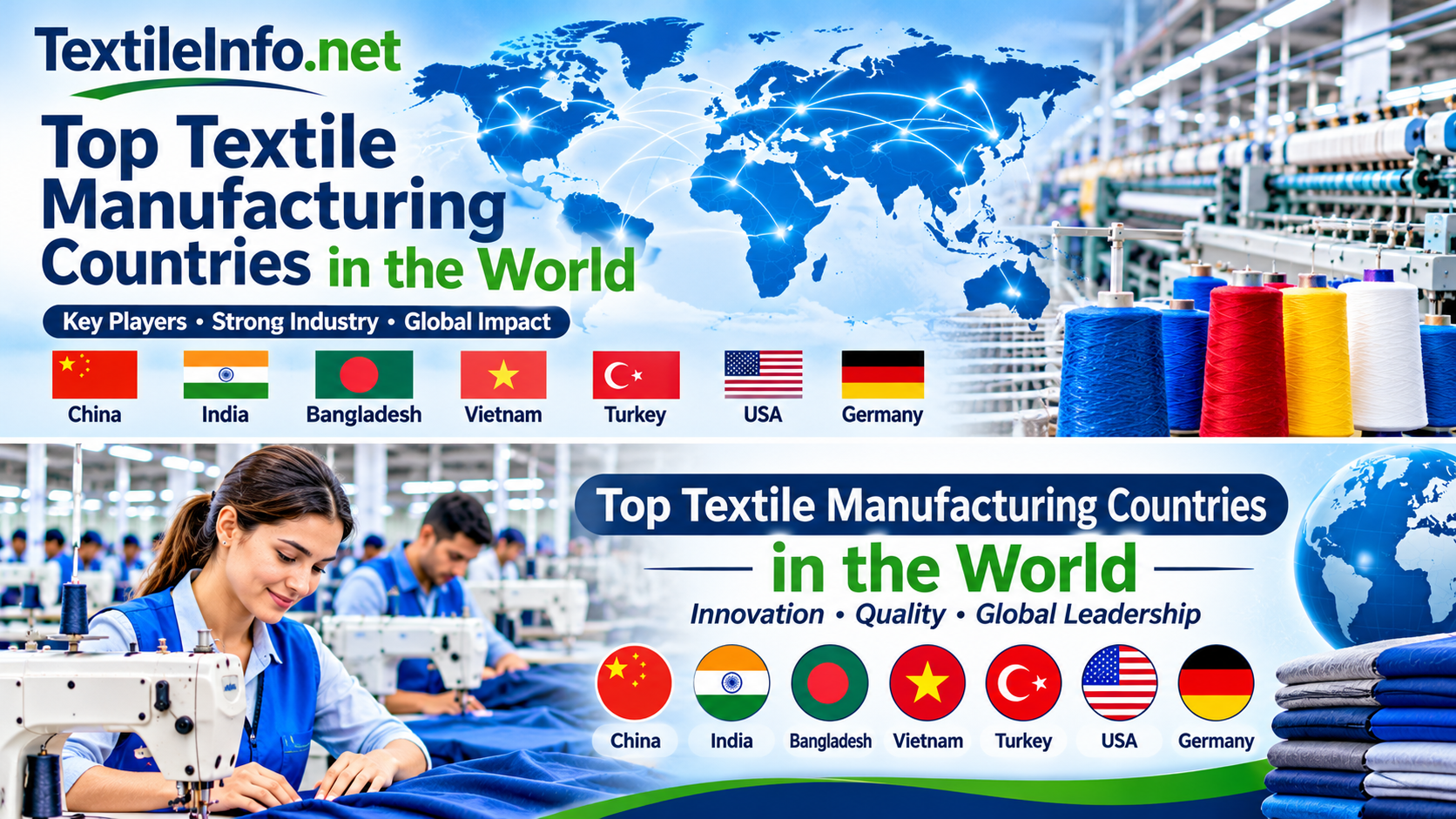
Top Textile Manufacturing Countries in the World: A Complete Global Guide
The global textile industry is one of the most important manufacturing sectors in the world. It connects raw material producers, spinning mills, fabric manufacturers, garment factories, international buyers, fashion brands and retailers.
Textile manufacturing plays an important role in international trade, employment, economic development, and technological innovation. From cotton fabrics and denim to luxury materials and advanced industrial textiles, manufacturers around the world supply products for different industries and markets.
Some countries have developed their industries around large-scale garment production, while others specialise in premium fabrics, technical textiles, textile machinery or advanced manufacturing.
China, India, Bangladesh, Vietnam, Türkiye, Italy and Germany are among the important names in the global textile supply chain.
For American and European businesses, understanding these manufacturing countries is valuable when evaluating suppliers, comparing production capabilities, and exploring international sourcing opportunities.
In this guide, we examine the top textile manufacturing countries in the world, their manufacturing strengths, major products, and roles in global textile trade.
1. China – The World’s Leading Textile Manufacturing Powerhouse
China is widely recognised as the largest textile and apparel manufacturing and exporting country.
Its extensive manufacturing infrastructure, integrated supply chains, skilled industrial workforce and access to advanced machinery have helped it become a major supplier to international markets.
Chinese manufacturers operate across almost every stage of textile production, including fibre processing, spinning, weaving, knitting, dyeing, finishing and garment manufacturing.
Major textile products
- Cotton fabrics
- Polyester and synthetic fabrics
- Denim
- Knitted fabrics
- Home textiles
- Technical textiles
- Ready-made garments
- Textile machinery and components
Why China is important
China’s major advantage is its highly developed manufacturing ecosystem. Many suppliers, raw material producers, processing facilities, and logistics services operate within established industrial clusters.
This allows manufacturers to handle large orders and produce a wide variety of textile products.
For American and European buyers, China remains an important sourcing destination for fabrics, machinery, accessories and finished products.
2. India – A Major Global Textile and Cotton Manufacturing Centre
India has a long textile manufacturing history and is one of the world’s important producers of cotton, yarn, fabrics and apparel.
Its textile industry combines traditional textile production with modern industrial manufacturing. The country has established spinning mills, weaving facilities, knitting units, processing factories, and garment manufacturing centres.
Major textile products
- Cotton yarn
- Cotton fabrics
- Denim
- Silk textiles
- Woollen fabrics
- Home textiles
- Synthetic fabrics
- Ready-made garments
Why India is important
India has a strong raw material base, particularly in cotton production. Its diverse textile manufacturing capabilities make it an important sourcing destination for international companies.
Indian manufacturers serve customers in North America, Europe, Asia, and other international markets.
The country’s textile sector also includes traditional handloom and handicraft businesses, which contribute to its distinctive textile identity.
3. Bangladesh – A Global Leader in Ready-Made Garment Manufacturing
Bangladesh has become one of the world’s most important ready-made garment manufacturing destinations.
The country’s apparel industry supplies clothing to major international brands, retailers and fashion companies, particularly in Europe and North America.
Bangladesh has developed substantial production capacity in knitwear, woven garments, denim and other apparel categories.
Major textile and garment products
- T-shirts
- Polo shirts
- Shirts
- Trousers
- Denim jeans
- Sweaters
- Knitwear
- Jackets
- Workwear
- Home textiles
Why Bangladesh is important
Bangladesh offers large-scale garment manufacturing capacity, an established export-oriented supply chain, and experience serving international fashion markets.
Its garment industry has also attracted attention for investments in factory safety, energy efficiency, and environmentally responsible manufacturing.
For American and European apparel companies, Bangladesh is an important sourcing destination, particularly for volume garment production.
However, the country’s textile sector faces challenges involving energy availability, production costs, infrastructure, and international competition.
4. Vietnam – A Fast-Growing Textile and Apparel Manufacturing Hub
Vietnam has become an important manufacturing destination for international apparel brands and retailers.
Its export-oriented industrial sector, investment in manufacturing facilities, and international trade relationships have supported the development of its textile and garment industry.
Major textile products
- Sportswear
- Knitwear
- T-shirts
- Jackets
- Activewear
- Woven garments
- Footwear-related textiles
- Synthetic fabrics
Why Vietnam is important
Vietnam has developed strong capabilities in garment manufacturing and export-oriented production.
Its position in international trade agreements and its established relationships with global brands make it an important alternative sourcing destination for international buyers.
The country is also investing in developing its textile supply chain and improving local production capabilities.
5. Türkiye – A Strategic Textile Manufacturing Centre Between Europe and Asia
Türkiye has a well-established textile and apparel manufacturing industry.
Its location between Europe and Asia makes it an important production and sourcing destination for European businesses.
The country produces a wide range of fabrics, yarns, home textiles, and finished clothing products.
Major textile products
- Cotton fabrics
- Denim
- Knitwear
- Home textiles
- Towels
- Bed linen
- Woven fabrics
- Ready-made garments
Why Türkiye is important
Turkish manufacturers are known for their established textile infrastructure, product variety, and access to European markets.
Geographic proximity can also support shorter transportation routes and faster sourcing cycles for some European buyers compared with more distant Asian manufacturing locations.
Türkiye is particularly relevant to fashion companies seeking fabric production and garment manufacturing within or close to the European supply chain.
6. Italy – A Global Centre for Luxury Fabrics and Premium Textiles
Italy is internationally recognised for its luxury fashion industry, premium fabrics and textile craftsmanship.
Italian textile manufacturers have developed strong reputations in high-quality materials, innovative fabric development and specialised textile production.
Important textile manufacturing areas include Biella, Prato and Como.
Major textile products
- Wool fabrics
- Cashmere textiles
- Silk fabrics
- Luxury cotton fabrics
- Premium knitwear
- Fashion textiles
- Technical fabrics
- High-end garment materials
Why Italy is important
Italy is particularly important for luxury fashion brands and premium textile buyers.
Its manufacturers combine traditional craftsmanship with modern production technology.
International fashion companies often source Italian fabrics for products where material quality, design, finishing, and manufacturing expertise are important.
7. Germany – A Leader in Textile Machinery and Technical Textiles
Germany has an important position in advanced textile manufacturing, industrial materials and textile engineering.
Unlike countries that primarily compete through large-scale apparel production, Germany is particularly recognised for engineering expertise, specialised machinery and technical textile applications.
Major textile products and technologies
- Technical textiles
- Industrial fabrics
- Automotive textiles
- Medical textiles
- Protective materials
- Textile machinery
- Filtration fabrics
- Advanced fibre materials
Why Germany is important
German manufacturers play an important role in the development of textile machinery, automation and specialised textile products.
Technical textiles are used in industries such as automotive manufacturing, healthcare, construction, aerospace and industrial filtration.
For European businesses, Germany is an important source of textile engineering knowledge and advanced manufacturing technologies.
8. United States – Advanced Textiles and Industrial Manufacturing
The United States has an established textile industry with strengths in advanced materials, technical textiles, industrial applications and specialised manufacturing.
Although much of the country’s clothing consumption is supplied through international imports, domestic textile manufacturing remains important in several specialised sectors.
Major textile products
- Industrial fabrics
- Medical textiles
- Protective textiles
- Automotive materials
- Nonwoven fabrics
- Technical fibres
- Home textiles
- Specialised apparel
Why the United States is important
American textile companies contribute to innovation in advanced materials, research and specialised industrial applications.
The country is also an important consumer market for imported textile and apparel products.
Its demand for sustainable fabrics, technical materials and specialised textiles creates opportunities for international manufacturers.
9. Pakistan – An Important Cotton and Textile Exporting Country
Pakistan has a substantial textile manufacturing sector supported by its cotton production and established textile processing facilities.
The textile industry is an important contributor to its export economy.
Major textile products
- Cotton yarn
- Cotton fabrics
- Denim
- Bed linen
- Towels
- Knitwear
- Ready-made garments
- Home textiles
Why Pakistan is important
Pakistan has developed strong capabilities in cotton spinning, fabric production, textile processing, and home textile manufacturing.
Its manufacturers supply international buyers in Europe, North America, and other markets.
The country continues to face challenges involving energy costs, production efficiency, and international competition.
10. Indonesia – An Established Textile and Apparel Manufacturing Destination
Indonesia is another important textile and apparel manufacturing country in Southeast Asia.
Its industry includes fibre production, spinning, weaving, knitting, processing, and garment manufacturing.
Major textile products
- Synthetic fabrics
- Cotton fabrics
- Knitwear
- Sportswear
- Casual clothing
- Denim
- Home textiles
- Finished apparel
Why Indonesia is important
Indonesia offers an established manufacturing base and access to regional and international markets.
Its textile and apparel industry serves both domestic consumers and overseas buyers.
The country also has opportunities to expand its capabilities in sustainable manufacturing and higher-value textile production.
11. Comparison of Major Textile Manufacturing Countries
Different countries have different manufacturing strengths. The following table provides a practical comparison for international sourcing professionals.
| Country | Major manufacturing strengths |
|---|---|
| China | Integrated textile and apparel manufacturing |
| India | Cotton, yarn, fabrics and apparel |
| Bangladesh | Large-scale garment manufacturing |
| Vietnam | Export-oriented apparel manufacturing |
| Türkiye | Fabrics, denim and garment production |
| Italy | Luxury fabrics and premium textiles |
| Germany | Technical textiles and machinery |
| United States | Advanced and industrial textiles |
| Pakistan | Cotton textiles and home textiles |
| Indonesia | Synthetic fabrics and apparel |
12. Global Textile and Apparel Export Rankings
Manufacturing capacity and export performance are related, but they are not identical.
According to the Confederation of Indian Textile Industry’s 2025 annual report, the following countries were among the leading textile and apparel exporters in 2024.
The figures below represent combined textile and apparel exports, in billions of US dollars.
| Rank | Country | 2024 exports |
|---|---|---|
| 1 | China | $299.02 billion |
| 2 | Bangladesh | $53.06 billion |
| 3 | Vietnam | $50.17 billion |
| 4 | Germany | $42.54 billion |
| 5 | Italy | $40.01 billion |
| 6 | India | $36.71 billion |
| 7 | Türkiye | $32.06 billion |
| 8 | United States | $24.67 billion |
| 9 | France | $21.23 billion |
| 10 | Netherlands | $20.00 billion |
These figures are useful for understanding international trade performance, but they should not be interpreted as a direct ranking of total factory production. Export totals can also include re-exports and products made using imported materials.
13. What Should American and European Buyers Consider When Choosing a Textile Manufacturing Country?
Choosing a manufacturing destination requires more than comparing production prices.
International buyers should evaluate several important factors before selecting suppliers.
Product specialisation
Different countries have different manufacturing strengths.
For example, Italy is an established destination for premium fabrics, Bangladesh is particularly important for garment manufacturing, and Germany is recognised for technical textiles and machinery.
Production capacity
Buyers should evaluate whether a manufacturer can meet the required order quantity, product specifications, and delivery schedule.
Product quality
Consistent fabric quality, colour accuracy, stitching standards and finishing are important when selecting an international supplier.
Compliance and responsible manufacturing
American and European buyers should assess applicable labour standards, environmental requirements, product safety rules and supplier certifications.
Transportation and lead times
Shipping costs, customs procedures, transportation routes, and delivery times can influence the total sourcing cost.
Supply chain transparency
Understanding where materials originate and how products are manufactured is increasingly important for international sourcing businesses.
14. Future Trends in Global Textile Manufacturing
The global textile industry is evolving as manufacturers respond to new technologies, environmental requirements, and changing consumer expectations.
Several developments are likely to influence the industry’s future.
Sustainable textile manufacturing: Companies are investing in resource efficiency, responsible chemical management, textile recycling and improved wastewater treatment.
Automation and artificial intelligence: Digital production systems, automated machinery and AI-assisted inspection can support efficiency and quality management.
Recycled fabrics: Recycled polyester, recycled cotton and other alternative materials are attracting attention from textile manufacturers and international brands.
Technical textiles: Demand for specialised fabrics in healthcare, construction, automotive and industrial applications creates opportunities beyond conventional clothing.
Digital textile printing: Digital printing provides greater flexibility for customised designs and shorter production runs.
Supply chain diversification: International buyers are exploring multiple sourcing destinations to improve supply chain resilience and manage manufacturing risks.
15. Conclusion: Which Countries Lead the Global Textile Industry?
The global textile industry depends on a network of manufacturing countries with different strengths and specialisations.
China remains a major global manufacturing and export powerhouse. India has a broad textile production base, while Bangladesh and Vietnam are important apparel manufacturing destinations.
Türkiye plays a strategic role in textile sourcing for Europe. Italy is recognised for luxury fabrics, while Germany and the United States have important capabilities in technical textiles, machinery and advanced materials.
There is no single best manufacturing country for every textile product. The right sourcing destination depends on product type, quality requirements, production capacity, cost, compliance and delivery expectations.
As international textile markets continue to evolve, manufacturers that invest in technology, sustainability, quality and supply chain transparency will be better positioned for long-term success.
TextileInfo.net aims to help international readers understand the textile and garment industry through practical guides, manufacturing insights, fabric information, market developments and global industry news.