Introduction:
https://textileinfo.net/types-of-textile-fabrics/How Sustainable Fabrics Are Produced: A Complete Guide. The textile industry is changing as manufacturers, fashion brands, and consumers pay greater attention to the environmental impact of clothing and other textile products. From everyday T-shirts to premium fashion collections, businesses are exploring ways to produce fabrics using more responsible materials and manufacturing methods.
Sustainable fabrics are becoming an important part of this transformation. They can be made from organically produced natural fibres, recycled materials, responsibly sourced cellulose, and innovative alternative resources. However, producing a sustainable fabric involves much more than choosing an environmentally friendly raw material. Every stage, including fibre production, yarn spinning, fabric construction, dyeing, finishing, and transportation, can influence the final product’s environmental footprint.
For manufacturers and fashion businesses in the United States and Europe, understanding these production methods is increasingly important. Buyers want reliable information about material origins, manufacturing practices, product durability, and environmental claims.
In this guide, we explain how sustainable fabrics are produced, which materials are commonly used, how textile factories can reduce environmental impacts, and what the future may hold for sustainable textile manufacturing.
What Are Sustainable Fabrics?
https://textileinfo.net/sustainable-textiles-eco-friendly-fabrics-future/Sustainable fabrics are textile materials produced with the aim of reducing environmental and social impacts throughout their lifecycle.
They may use renewable raw materials, recycled fibres, more efficient production processes, safer chemical management, and responsible manufacturing practices.
Unlike conventional production methods that may depend heavily on virgin resources and resource-intensive processing, sustainable textile manufacturing focuses on improving the way materials are sourced, processed, used, and recovered.
Common examples include:
- Organic cotton fabric
- Recycled polyester fabric
- Recycled cotton fabric
- Hemp fabric
- Linen fabric
- Lyocell fabric
- Responsibly produced wool
- Recycled nylon
- Innovative bio-based textile materials
It is important to understand that no fabric is automatically sustainable simply because it is natural, recycled, or biodegradable. Its actual environmental performance depends on how the raw material is produced, how the fabric is manufactured, how long the product lasts, and what happens when it is no longer needed.
1. Selecting Sustainable Raw Materials
The first stage of sustainable fabric production is selecting suitable raw materials.
Textile manufacturers can choose from several categories, depending on the intended product, required performance, availability, and sourcing standards.
Organic Cotton
Organic cotton is grown according to recognised organic agricultural standards. These systems generally restrict synthetic pesticides and fertilisers and include requirements related to soil management and other farming practices.
The production process begins with cotton cultivation. After harvesting, the cotton fibres are separated from the seeds, cleaned, and prepared for textile processing.
Organic cotton can be used in T-shirts, shirts, underwear, towels, bedsheets, baby clothing, and other everyday textile products.
However, organic cotton is not automatically impact-free. Water use, agricultural practices, processing, transportation, and product durability still matter.
Recycled Polyester
Recycled polyester is produced by recovering polyester-containing materials and processing them into usable raw material for new products.
One common source is used PET plastic bottles. These materials are collected, sorted, cleaned, and processed into flakes or other suitable forms before being converted into polyester chips or fibres.
Another source is discarded polyester textile material.
Recycled polyester is used in sportswear, jackets, bags, footwear, upholstery, and fashion products.
Textile-to-textile recycling is particularly important because it aims to recover fibres from old garments and fabric waste rather than relying only on non-textile waste streams.
Hemp Fabric
Hemp is a plant-based fibre obtained from the stalks of the hemp plant.
After harvesting, the stalks undergo processing to separate the useful fibres from other plant material. The fibres are then cleaned, prepared, and spun into yarn.
Hemp fabric is used in shirts, trousers, bags, home furnishings, and selected industrial textile products.
Its agricultural requirements depend on the growing region, farming system, and local conditions.
Linen Fabric
Linen is produced from flax plants. After cultivation, flax stems are harvested and processed to separate the fibres.
Traditional processing can include retting, breaking, scutching, and hackling. These operations help separate and prepare the long fibres for spinning.
The resulting yarn can be woven or knitted into fabric.
Linen is widely used in summer clothing, shirts, dresses, curtains, tablecloths, and bedding.
Lyocell Fabric
Lyocell is a regenerated cellulose fibre commonly produced using wood-based cellulose.
In a typical lyocell production process, cellulose is dissolved in a solvent and extruded through spinnerets to form fibres. The solvent is recovered and reused within the production system.
Lyocell is often selected for its soft feel, moisture management characteristics, and versatility.
It is used in dresses, shirts, underwear, denim blends, home textiles, and other apparel products.
The origin of the wood pulp, forestry management, chemical recovery, and manufacturing energy are important when evaluating its environmental performance.
2. Preparing and Processing the Fibres
https://textileinfo.net/global-textile-industry/After raw material sourcing, the next stage is fibre preparation.
The exact process depends on the material.
For cotton, cleaning equipment removes seeds, leaves, dust, and other unwanted particles. The fibres are then opened and prepared for spinning.
For recycled polyester, recovered materials must be sorted and processed to obtain suitable raw material. Depending on the recycling method, this may involve mechanical or chemical processing.
For flax and hemp, fibre separation and cleaning are important before spinning.
Lyocell follows a different route because cellulose must first be processed into a suitable solution before new fibres are formed.
At this stage, manufacturers should pay attention to:
- Raw material quality
- Fibre cleanliness
- Processing energy
- Material losses
- Water consumption
- Waste generation
- Traceability of incoming materials
Efficient fibre preparation can reduce production waste and improve the consistency of the final fabric.
3. Sustainable Yarn Manufacturing
After fibre preparation, the materials are converted into yarn.
Yarn manufacturing is an important part of the textile supply chain because the quality and structure of yarn influence fabric strength, appearance, comfort, and durability.
For staple fibres such as cotton, recycled cotton, and many wool fibres, spinning machines convert loose fibres into continuous yarn.
Common spinning technologies include:
- Ring spinning
- Open-end spinning
- Compact spinning
- Air-jet spinning
Filament materials such as polyester and nylon can follow different yarn production routes.
Sustainable yarn manufacturing focuses on reducing unnecessary material loss, improving machinery efficiency, and using appropriate energy management systems.
Factories may also incorporate recycled fibres into blended yarns.
For example, a yarn may combine recycled cotton with responsibly sourced virgin cotton to achieve particular strength and quality requirements.
The correct fibre blend depends on the product’s intended use and performance specifications.
4. Fabric Manufacturing: Weaving, Knitting and Nonwoven Production
Once the yarn is ready, it moves to the fabric manufacturing stage.
There are three major methods used in modern textile production.
Sustainable Weaving
Weaving involves interlacing warp and weft yarns to create a fabric structure.
Woven fabrics are commonly used in shirts, trousers, denim, jackets, curtains, and bedsheets.
Sustainable weaving focuses on efficient machinery operation, reducing yarn breakage, minimising production waste, and improving energy use.
Sustainable Knitting
Knitting creates fabric through interconnected loops of yarn.
It is widely used in T-shirts, sportswear, underwear, sweaters, socks, and activewear.
Modern knitting machines can produce different structures and fabric weights according to the requirements of fashion brands and textile buyers.
Efficient machine settings and production planning can help reduce waste and unnecessary resource consumption.
Nonwoven Fabric Production
Nonwoven materials are produced by bonding or mechanically entangling fibres rather than using conventional weaving or knitting.
These materials are used in filtration, healthcare, hygiene products, protective clothing, and industrial applications.
Recycled or responsibly sourced fibres may be incorporated into selected nonwoven products, depending on technical requirements.
5. Eco-Friendly Dyeing and Textile Printing
Dyeing and printing are important stages of fabric manufacturing because they determine the colour and visual appearance of textile products.
However, conventional wet processing can require significant quantities of water, energy, dyes, and chemical inputs.
Sustainable textile manufacturing therefore explores methods to improve resource efficiency and chemical management.
Low-Water Dyeing
Manufacturers can use suitable dyeing technologies and process controls to reduce water consumption.
Some modern systems use alternative dyeing methods or specialised equipment designed to reduce the amount of water needed.
The most appropriate technology depends on fibre composition, fabric construction, colour requirements, and production volume.
Natural Dyes
Natural dyes can be obtained from plants, minerals, and other natural sources.
Examples include selected plant extracts used to colour textile materials.
However, natural dyes are not automatically environmentally preferable. Their production may involve land, water, processing chemicals, and mordants. Colour consistency and durability also need to be considered.
Digital Textile Printing
Digital textile printing applies designs directly to fabric using specialised printing equipment.
It can provide design flexibility and may reduce certain types of setup waste, particularly for shorter production runs.
Its overall environmental performance depends on ink chemistry, pretreatment, fabric type, equipment efficiency, and post-printing processes.
Responsible Chemical Management
Sustainable dyeing and printing facilities should select suitable chemical inputs, follow appropriate safety procedures, monitor wastewater, and manage treatment systems effectively.
This helps reduce the risk of harmful substances entering surrounding water systems.
6. Sustainable Fabric Finishing
After dyeing or printing, fabrics often require finishing treatments to achieve their final characteristics.
Finishing can improve softness, appearance, wrinkle resistance, shrinkage control, durability, and functional performance.
Traditional finishing processes may use chemicals, water, heat, and mechanical treatments.
Sustainable finishing aims to achieve the required fabric performance while reducing unnecessary resource consumption and chemical risks.
Common approaches include:
- More efficient heat-setting systems.
- Improved control of water and chemical usage.
- Reduced-waste finishing processes.
- Suitable lower-impact chemical alternatives.
- Wastewater treatment and reuse.
- Mechanical finishing techniques where appropriate.
For example, a manufacturer producing cotton bedsheets may optimise finishing conditions to achieve softness and dimensional stability without unnecessary processing.
The objective is not simply to remove chemicals from production but to select processes that are effective, safe, and suitable for the final application.
7. Quality Testing and Certification
Sustainable fabrics must meet the same important product-quality expectations as conventional fabrics.
A material that claims to be sustainable but wears out quickly may require frequent replacement, reducing its overall benefits.
Manufacturers therefore carry out quality checks before fabrics are supplied to garment factories or other buyers.
Common textile tests include:
- Fabric strength testing
- Colourfastness testing
- Shrinkage testing
- Pilling resistance
- Dimensional stability
- Fibre composition verification
- Chemical residue testing
- Durability assessment
Important Textile Certifications
Certifications and verification systems can help buyers evaluate material claims and manufacturing practices.
Global Organic Textile Standard (GOTS): Covers organic fibre requirements and environmental and social criteria across relevant textile processing and manufacturing stages.
Organic Content Standard (OCS): Provides a system for verifying organic material content through the supply chain.
Global Recycled Standard (GRS): Verifies recycled material content and includes additional processing and social, environmental, and chemical requirements.
OEKO-TEX STANDARD 100: Tests textile products for harmful substances according to its criteria. It is a product safety certification, not proof that a fabric is entirely sustainable.
Certification requirements differ, so buyers should check the current scope and validity of each certificate rather than relying only on a logo or marketing statement.
8. How Sustainable Fabrics Are Different from Conventional Fabrics
Sustainable and conventional fabrics can use similar fibre types and manufacturing techniques. The main differences often involve raw material sourcing, processing standards, resource efficiency, recycled content, and supply chain management.
| Production factor | Conventional approach | More sustainable approach |
|---|---|---|
| Raw materials | Often virgin materials | Recycled or responsibly sourced materials |
| Fibre production | Conventional agricultural or industrial systems | Verified lower-impact sourcing where available |
| Spinning | Standard production systems | Efficient machinery and reduced waste |
| Dyeing | Conventional wet processing | Improved water, energy, and chemical management |
| Finishing | Conventional treatments | Optimised processes and suitable safer alternatives |
| Waste management | Waste may be discarded | Reuse, recovery, and recycling where feasible |
| Traceability | Supplier information may be limited | Better material and supplier documentation |
This comparison is general. Actual results vary by factory, material, production technology, and verification method.
9. Environmental Benefits of Sustainable Fabric Production
When responsibly designed and manufactured, sustainable fabrics can help reduce certain environmental pressures associated with textile production.
Reduced Dependence on Virgin Materials
Recycled fabrics can reduce the need for some virgin raw materials by recovering useful materials from existing waste streams.
Improved Water Management
Better agricultural practices, efficient dyeing systems, and wastewater treatment can help reduce pressure on freshwater resources.
Reduced Production Waste
Careful fabric cutting, better production planning, recycling, and material recovery can reduce the amount of textile waste generated.
Improved Chemical Management
Responsible chemical selection and wastewater controls can reduce the risk of harmful substances being released during manufacturing.
Support for Circular Textile Systems
Durable fabrics, repairable products, reuse, and recycling can help keep textile materials in use for longer.
However, these benefits should be evaluated through reliable production information and lifecycle assessment rather than assumed from a fabric’s name alone.
10. Challenges in Producing Sustainable Fabrics
Despite growing interest, sustainable textile production still faces several challenges.
Higher Production Costs
Some certified materials, specialised machinery, recycling technologies, and responsible processing systems can increase production costs.
Smaller manufacturers may find it difficult to finance the necessary improvements.
Limited Recycled Textile Availability
Recycling old garments into new textile fibres is technically challenging.
Blended materials, dyes, finishing chemicals, zippers, buttons, and other components can complicate the recycling process.
Quality and Performance Requirements
Recycled fibres may have different strength, length, or consistency characteristics compared with virgin fibres.
Manufacturers must develop suitable blends and production settings to meet buyer requirements.
Supply Chain Transparency
Brands may know their direct garment factories but have limited information about the farms, spinning mills, fibre processors, and chemical suppliers further upstream.
Reliable traceability requires cooperation across the entire supply chain.
Greenwashing
Some businesses make broad environmental claims without providing sufficient evidence.
Words such as green, natural, eco-friendly, and sustainable should be supported by clear information about materials, production practices, and verification.
11. Sustainable Fabric Production in the USA and Europe
The United States and European markets are important destinations for textile and apparel products. Businesses selling into these markets increasingly need to consider material transparency, product quality, environmental performance, and relevant regulations.
United States
American fashion brands, retailers, manufacturers, and textile buyers are exploring recycled fibres, organic cotton, responsible sourcing, and more efficient production systems.
For US businesses, material documentation and credible product claims are important when communicating environmental benefits to customers.
Manufacturers should ensure that environmental marketing statements are accurate, specific, and supported by evidence.
Europe
European textile businesses are operating in a policy environment that increasingly focuses on product durability, circularity, traceability, and responsible production.
The European Union’s Sustainable and Circular Textiles Strategy sets out a direction for textiles that are more durable, repairable, recyclable, and produced with greater consideration for environmental and social impacts.
The EU is also developing textile-related requirements under its Ecodesign for Sustainable Products Regulation framework.
Textile apparel is included among the priority product groups in the 2025–2030 working plan for ecodesign requirements and Digital Product Passports. The detailed textile-specific requirements will be established through future legislation.
For manufacturers exporting to Europe, monitoring these developments and maintaining reliable product and supplier records can help prepare for changing market requirements.
12. The Future of Sustainable Textile Manufacturing
The future of sustainable fabric production will likely involve a combination of better raw materials, more efficient machinery, recycling technologies, digital systems, and improved product design.
Several developments deserve attention.
Textile-to-Textile Recycling
Instead of relying mainly on recycled materials from other industries, manufacturers are working to recover fibres from used clothing and textile waste.
Improving fibre separation and recycling technology could help create more circular textile supply chains.
Advanced Recycling Technologies
Mechanical recycling is already used for certain materials. Chemical recycling is also being developed for selected fibre types and material streams.
These technologies face challenges involving cost, energy requirements, feedstock quality, and commercial scalability.
Artificial Intelligence in Textile Manufacturing
AI can help textile factories improve fabric inspection, predict machine maintenance needs, manage production schedules, and reduce certain types of material waste.
Bio-Based Materials
Research is exploring fibres and textile materials derived from renewable biological resources, agricultural by-products, and other alternative feedstocks.
Digital Traceability
Digital systems can help manufacturers and brands maintain information about fibre origins, processing facilities, material composition, and product movement.
These developments may support greater transparency and help buyers make better-informed sourcing decisions.
How Textile Manufacturers Can Start Producing More Sustainable Fabrics
Textile manufacturers do not necessarily need to replace their entire production systems immediately. A practical improvement programme can begin with measurable changes.
Step 1: Review raw material sourcing. Identify the origin and composition of fibres used in production.
Step 2: Evaluate suppliers. Request relevant certificates, test reports, and information about farming or manufacturing practices.
Step 3: Measure resource consumption. Track water, energy, chemicals, and material waste throughout production.
Step 4: Improve manufacturing efficiency. Review spinning, weaving, knitting, dyeing, and finishing operations to identify avoidable losses.
Step 5: Introduce suitable recycled materials. Test recycled fibres and blends to ensure that the final products meet required performance specifications.
Step 6: Strengthen chemical management. Use appropriate chemical controls, wastewater treatment, and worker safety procedures.
Step 7: Improve traceability. Maintain reliable records from raw material suppliers through to finished fabric production.
Step 8: Measure results. Compare performance over time using clear indicators rather than relying on general environmental claims.
This approach can help manufacturers improve production performance while building stronger relationships with international buyers.
Conclusion
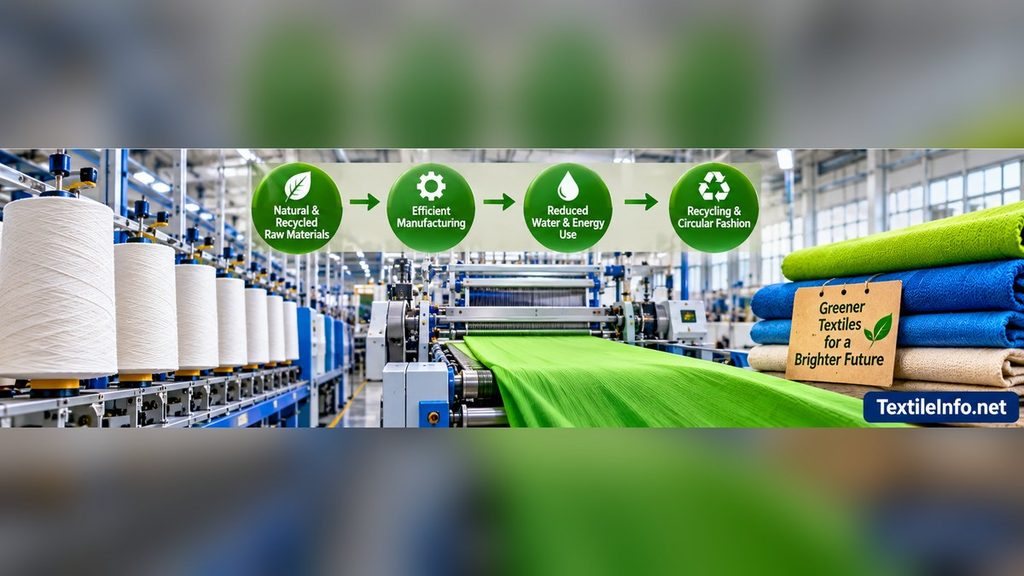
Sustainable fabrics are produced through a combination of responsible raw material sourcing, efficient fibre processing, yarn manufacturing, fabric construction, improved dyeing, and careful finishing.
Materials such as organic cotton, recycled polyester, hemp, linen, and lyocell offer different opportunities for textile manufacturers and fashion businesses. However, selecting an alternative fibre is only one part of sustainable textile production.
Every stage of the manufacturing process matters. Water consumption, energy use, chemical management, waste generation, product durability, and supplier transparency all influence the final environmental performance of a textile product.
For American and European brands, manufacturers, and sourcing professionals, understanding how sustainable fabrics are produced can support better purchasing decisions and more responsible product development.
As recycling technologies, digital traceability, and resource-efficient manufacturing continue to develop, sustainable fabric production is likely to become an increasingly important part of the global textile industry.
The future of textiles will not depend on one perfect fabric. It will depend on making better decisions throughout the entire production and supply chain.