Introduction:
Top 10 Most Popular Types of Textile Fabrics and Their Uses. Fabric is an essential part of everyday life. From the cotton T-shirt we wear in the morning to the curtains in our homes, textile materials are used in countless products around the world. The fashion, apparel, furniture, automotive, healthcare, and manufacturing industries all depend on different types of fabrics to produce goods for modern consumers.
However, not all fabrics are the same. Some materials are soft and breathable, while others are strong, lightweight, stretchy, or resistant to moisture. The choice of fabric affects a product’s comfort, appearance, durability, performance, and price.
For clothing brands, textile manufacturers, designers, retailers, and consumers in the United States and Europe, understanding fabric properties is important when selecting the right material for a particular application.
In this guide, we explore the top 10 most popular types of textile fabrics, explain their main characteristics, and look at how they are used in clothing, home furnishings, and industrial products.
What Are Textile Fabrics?
https://textileinfo.net/global-textile-supply-chain/Textile fabrics are flexible materials made by arranging, interlacing, bonding, or processing fibres and yarns. They are used to manufacture clothing, accessories, household products, and many technical applications.
Fabrics can be produced from natural, synthetic, regenerated, or blended fibres.
The three major fabric construction methods are:
- Woven fabrics: Made by interlacing two sets of yarns, generally called warp and weft.
- Knitted fabrics: Produced by forming interconnected loops of yarn.
- Nonwoven fabrics: Made by bonding or mechanically entangling fibres without traditional weaving or knitting.
The final characteristics of a fabric depend on its fibre composition, yarn structure, construction, weight, finishing, and manufacturing process.
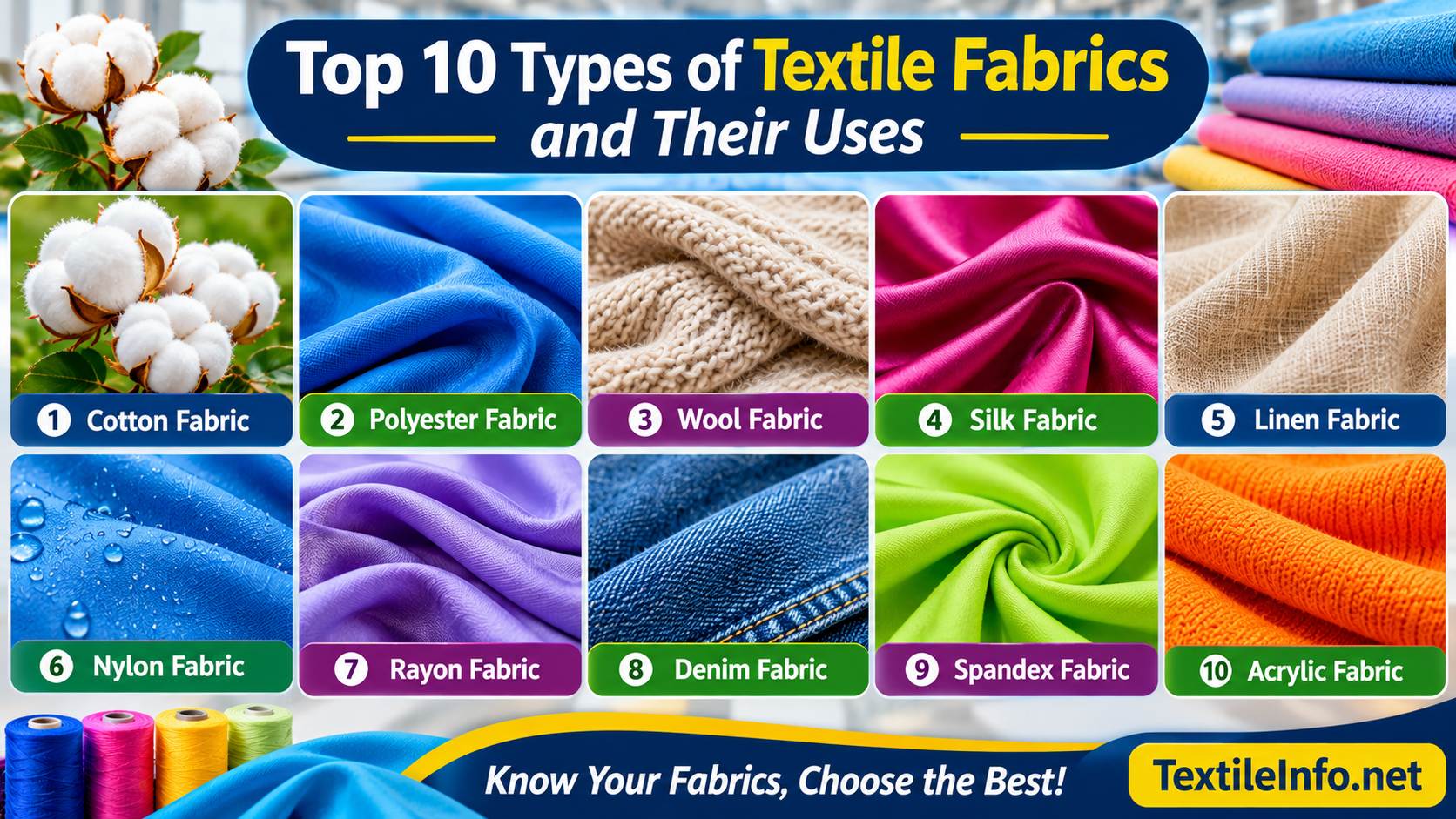
Top 10 Most Popular Types of Textile Fabrics
1. Cotton Fabric
Cotton is one of the best-known natural textile materials in the world. It is produced from the soft fibres surrounding the seeds of the cotton plant.
Cotton fabric is popular because of its comfort, breathability, and versatility. It can be manufactured in different weights, textures, and constructions, making it suitable for both lightweight summer clothing and heavier products such as denim.
Main characteristics of cotton fabric:
- Soft and comfortable against the skin.
- Generally breathable and absorbent.
- Easy to dye and print.
- Available in many fabric constructions and weights.
- Can wrinkle and shrink if not properly processed or cared for.
Common uses:
Cotton is widely used in T-shirts, shirts, jeans, underwear, baby clothing, towels, bedsheets, pillowcases, and other home textiles.
In the US and European markets, cotton remains an important material for everyday apparel and household products. Organic cotton is also used by brands seeking alternative sourcing options, although environmental performance depends on the full production process.
2. Polyester Fabric
https://textileinfo.net/ai-in-textile-manufacturing/Polyester is a synthetic textile fibre widely used in the global apparel and manufacturing industries. It is commonly produced from petroleum-based chemical raw materials, although recycled polyester can be made from suitable recovered materials.
One reason for polyester’s popularity is its versatility. It can be engineered for different levels of softness, strength, stretch, moisture management, and appearance.
Main characteristics of polyester fabric:
- Strong and durable for many applications.
- Resists wrinkles and retains its shape well.
- Dries relatively quickly.
- Often holds colour well.
- Can retain heat and may feel less breathable than some natural fabrics, depending on construction.
- Synthetic polyester garments can release microfibres during washing.
Common uses:
Polyester is used in sportswear, jackets, uniforms, T-shirts, dresses, upholstery, curtains, bags, and industrial textiles.
Recycled polyester is increasingly used in products where brands want to incorporate recovered material. However, recycled content alone does not make a product automatically sustainable.
3. Wool Fabric
Wool is a natural animal fibre obtained mainly from sheep. It is valued for its ability to provide warmth, insulation, and comfort in cooler conditions.
Different wool types have different characteristics. Merino wool, for example, is often used in finer garments because of its relatively soft feel.
Main characteristics of wool fabric:
- Provides natural insulation.
- Can absorb moisture vapour.
- Has natural elasticity and resilience.
- Can help regulate comfort across changing temperatures.
- May shrink or become damaged if washed or dried incorrectly.
- Some wool fabrics may feel itchy to sensitive skin.
Common uses:
Wool is commonly used in sweaters, coats, suits, scarves, blankets, socks, and premium winter clothing.
In colder parts of the United States and Europe, wool remains an important material for winter apparel and specialised clothing.
4. Silk Fabric
https://textileinfo.net/sustainable-textiles-eco-friendly-fabrics-future/Silk is a natural protein fibre traditionally produced by silkworms. It is associated with luxury clothing because of its smooth texture, elegant appearance, and distinctive drape.
Silk fabrics can be lightweight or relatively substantial depending on the yarn and construction used.
Main characteristics of silk fabric:
- Smooth and soft surface.
- Attractive natural lustre.
- Lightweight varieties offer excellent drape.
- Comfortable in many clothing applications.
- Can be sensitive to sunlight, perspiration, and some cleaning methods.
- Often requires careful handling and maintenance.
Common uses:
Silk is used in dresses, blouses, scarves, ties, luxury accessories, lingerie, and premium home textiles.
Fashion designers use silk when they want a flowing appearance and a refined finish.
5. Linen Fabric
Linen is a natural textile material made from fibres extracted from the flax plant. It is especially popular in warm-weather clothing because of its breathable structure and comfortable feel.
Linen has a distinctive natural texture that makes it attractive for both casual and premium fashion products.
Main characteristics of linen fabric:
- Breathable and comfortable in warm weather.
- Absorbs moisture.
- Often has a crisp, natural appearance.
- Can be durable when properly manufactured and maintained.
- Wrinkles more easily than many synthetic fabrics.
- May feel relatively firm before repeated use or washing.
Common uses:
Linen is used in summer shirts, trousers, dresses, jackets, tablecloths, curtains, bedsheets, and decorative home textiles.
European fashion brands frequently use linen in warm-weather collections because of its natural appearance and distinctive texture.
6. Nylon Fabric
Nylon is a synthetic fibre known for its strength, abrasion resistance, and lightweight performance. It was one of the early commercially successful synthetic fibres and remains important in modern textile manufacturing.
Nylon can be engineered into different fabric structures for clothing, accessories, and technical applications.
Main characteristics of nylon fabric:
- High strength relative to its weight.
- Good abrasion resistance.
- Lightweight and flexible.
- Can dry relatively quickly.
- May be sensitive to high temperatures.
- Can generate microfibre pollution during washing, like other synthetic textiles.
Common uses:
Nylon is used in sportswear, swimwear, tights, stockings, backpacks, luggage, outdoor jackets, ropes, and industrial materials.
Its durability makes it useful for products that experience frequent movement or friction.
7. Rayon and Viscose Fabric
Rayon is a family of manufactured regenerated-cellulose fibres. Viscose is one of the most familiar types of rayon.
These fibres are produced by processing cellulose-based raw materials into a form that can be spun into textile fibres. Their properties depend on the production method and fabric construction.
Rayon and viscose are often chosen because they can provide a soft feel and attractive drape.
Main characteristics:
- Soft and comfortable texture.
- Often has a smooth appearance.
- Can provide good drape.
- Absorbs moisture.
- Some varieties can lose strength when wet.
- May shrink or wrinkle without appropriate care.
Common uses:
Viscose and other rayon fabrics are used in dresses, blouses, skirts, linings, shirts, scarves, and home textiles.
They are popular in fashion because they can create flowing garments at different price points.
8. Denim Fabric
Denim is a durable woven textile traditionally made from cotton yarns using a twill construction. It is widely recognised by its characteristic diagonal surface pattern and classic blue appearance.
Traditional denim usually uses indigo-dyed warp yarns and lighter weft yarns, although modern denim is available in many colours and finishes.
Main characteristics of denim:
- Durable and suitable for everyday use.
- Often has a firm structure.
- Available in different weights.
- Can develop a distinctive appearance through wear and washing.
- May require substantial water and energy during certain dyeing and finishing processes.
Common uses:
Denim is used in jeans, jackets, shirts, skirts, shorts, bags, and other fashion products.
Stretch denim may include elastane or another stretch component to improve flexibility and comfort.
9. Spandex (Elastane) Fabric
Spandex, also known as elastane, is a synthetic fibre designed to provide exceptional stretch and recovery. It is rarely used alone in everyday clothing and is usually blended with fibres such as cotton, polyester, or nylon.
Even a relatively small percentage of elastane can significantly change the flexibility of a fabric.
Main characteristics:
- Excellent stretch.
- Good shape recovery.
- Provides flexibility and freedom of movement.
- Can improve the fit of close-fitting clothing.
- Requires suitable heat and care conditions.
- Its presence can complicate some textile recycling processes.
Common uses:
Elastane is used in leggings, sportswear, swimwear, underwear, jeans, socks, compression garments, and fitted fashion products.
It is particularly important in activewear because it helps garments move with the body.
10. Acrylic Fabric
Acrylic is a synthetic textile fibre commonly used as an alternative to wool in selected clothing and home textile products.
It can be manufactured to provide a soft, warm feel and is often used in knitted products.
Main characteristics:
- Lightweight.
- Provides warmth.
- Often soft to the touch.
- Can retain colour well.
- May develop pilling with use.
- Can generate synthetic microfibres during washing.
Common uses:
Acrylic is used in sweaters, scarves, hats, blankets, socks, upholstery, and knitted accessories.
It is often blended with wool or other fibres to adjust cost, texture, warmth, and performance.
Comparison of the Top 10 Textile Fabrics
The following table provides a simple comparison of these popular materials.
| Fabric | Fibre category | Main advantage | Common application |
|---|---|---|---|
| Cotton | Natural | Comfort and breathability | T-shirts and bedsheets |
| Polyester | Synthetic | Durability and easy care | Sportswear and jackets |
| Wool | Natural | Warmth and insulation | Sweaters and coats |
| Silk | Natural | Smoothness and drape | Luxury clothing |
| Linen | Natural | Breathability | Summer clothing |
| Nylon | Synthetic | Strength and abrasion resistance | Bags and sportswear |
| Rayon/Viscose | Regenerated cellulose | Softness and drape | Dresses and blouses |
| Denim | Usually cotton-based woven fabric | Durable construction | Jeans and jackets |
| Spandex/Elastane | Synthetic | Stretch and recovery | Leggings and activewear |
| Acrylic | Synthetic | Lightweight warmth | Sweaters and blankets |
Note: Denim is a fabric construction rather than a separate fibre category. Its composition can vary, and some denim includes elastane or other fibres.
Natural Fabrics vs Synthetic Fabrics: What Is the Difference?
One of the most common questions among textile buyers and consumers is whether natural or synthetic fabrics are better.
The answer depends on the intended use.
Natural fabrics
Natural fabrics are made from fibres obtained from plants or animals. Cotton, linen, wool, and silk are familiar examples.
They are often selected for comfort, appearance, moisture absorption, and specific performance characteristics.
However, natural fibres are not automatically environmentally friendly. Their overall impact depends on farming or animal production, land use, water, processing, dyeing, transportation, durability, and end-of-life treatment.
Synthetic fabrics
Synthetic fabrics are made from manufactured fibres such as polyester, nylon, acrylic, and elastane.
They are often selected for durability, strength, stretch, quick drying, and specialised performance.
However, many synthetic fibres are derived from fossil resources and can contribute to microfibre pollution. Their environmental impact depends on production, use, durability, and disposal.
Which should you choose?
For breathable everyday clothing, cotton and linen may be suitable choices. For high-performance sportswear, polyester, nylon, and elastane blends may be more appropriate. Wool can work well for insulation, while silk and viscose are often selected for their drape and appearance.
The best fabric is the one that meets the product’s performance, comfort, price, care, and environmental requirements.
How to Choose the Right Textile Fabric
Selecting a fabric involves more than comparing colours and prices. Manufacturers, designers, and buyers should consider several technical and commercial factors.
1. Purpose of the product
A fabric for a summer shirt needs different characteristics from one designed for an outdoor jacket or industrial filter.
2. Comfort and breathability
Clothing that sits close to the skin often requires careful consideration of softness, moisture management, air permeability, and thermal comfort.
3. Durability
Products exposed to frequent washing, stretching, or abrasion need materials that can withstand their expected use.
4. Fabric weight and construction
Fabric weight, thickness, weave, knit structure, and finishing affect how a material performs and looks.
5. Maintenance requirements
Buyers should consider washing temperature, drying instructions, ironing, shrinkage, and colourfastness.
6. Cost and availability
The cost of a fabric depends on fibre quality, yarn specifications, construction, finishing, order volume, supplier location, and market conditions.
7. Sustainability and compliance
Businesses should evaluate the origin of fibres, chemical management, manufacturing conditions, recycled content claims, and relevant market requirements.
For international sourcing, buyers should request appropriate test reports, product specifications, and supporting documentation from suppliers.
The Role of Textile Fabrics in the Global Fashion Industry
The global fashion industry depends on a wide range of textile materials to produce garments for different climates, lifestyles, and consumer preferences.
In the United States, demand covers everyday apparel, sportswear, denim, uniforms, home textiles, and outdoor clothing.
European markets include a broad range of fashion segments, from affordable everyday clothing to premium and luxury products, as well as technical and industrial textiles.
Textile manufacturers in countries such as China, India, Bangladesh, Vietnam, Türkiye, and Italy supply different materials and finished products to international buyers.
The choice of fabric influences production methods, garment design, quality standards, pricing, and sourcing decisions.
As consumer expectations change, manufacturers are also exploring recycled fibres, alternative cellulose-based materials, improved finishing technologies, and more efficient production processes.
Future Trends in Textile Fabrics
The textile industry continues to develop new materials and manufacturing techniques. Several trends are influencing the future of fabric production.
1. Recycled textile materials
Recycled cotton, recycled polyester, and other recovered fibres are being used in selected clothing, accessories, and home textile products.
2. Bio-based fibres
Research and commercial development are exploring fibres made from renewable biological resources and alternative raw materials.
3. Functional and smart fabrics
Technical textiles can offer features such as moisture management, thermal regulation, protection, conductivity, or sensing capabilities.
4. Digital textile printing
Digital printing technology allows manufacturers to produce detailed designs and smaller production runs with greater flexibility.
5. More responsible manufacturing
Manufacturers are exploring ways to improve water and energy efficiency, manage chemicals, reduce waste, and increase material traceability.
These developments may change how brands select fabrics and how textile manufacturers compete in international markets.
Conclusion
Textile fabrics are the foundation of the global clothing, fashion, home furnishing, and technical textile industries. Each material has its own characteristics, advantages, limitations, and applications.
Cotton and linen are valued for their natural comfort, polyester and nylon for their versatility and performance, wool for warmth, silk for its elegant appearance, and elastane for stretch. Denim, viscose, and acrylic also play important roles in modern textile production.
For manufacturers, designers, sourcing professionals, and consumers in the United States and Europe, understanding these materials makes it easier to select the right fabric for each product.
As textile technology develops and sustainability becomes more important, the industry will continue to explore new fibres, improved manufacturing methods, and better ways to use resources.
Understanding fabric types is a useful first step towards understanding the wider global textile industry.