Sustainable Textiles: The Future of Eco-Friendly Fashion and Manufacturing. The global textile industry is entering a new era. Consumers, fashion brands, manufacturers, and retailers are paying greater attention to how fabrics are produced, where raw materials come from, and what happens to clothing after it is used. As environmental concerns become increasingly important, sustainable textiles are emerging as a major part of the future of the fashion and manufacturing industries.
Across the United States and Europe, demand for responsible production, environmentally conscious materials, and transparent supply chains is creating new opportunities for textile businesses. From organic cotton and recycled polyester to innovative plant-based fibres, the industry is exploring better ways to manufacture fabrics while reducing environmental pressure.
But what exactly are sustainable textiles, why do they matter, and how could they transform the global textile industry?
What Are Sustainable Textiles?
Sustainable textiles are fabrics and textile products designed, manufactured, and distributed with consideration for their environmental and social impacts throughout their life cycle.
This approach covers more than choosing natural fibres. It also considers water consumption, energy efficiency, chemical management, working conditions, product durability, transportation, waste reduction and recycling.
A fabric is not automatically sustainable simply because it comes from a natural source. The farming process, manufacturing methods, dyeing techniques, and product lifespan all influence its overall environmental performance.
The main objective is to create textile products that meet consumer and business needs while using resources more responsibly.
Why Are Sustainable Textiles Important?
Traditional textile manufacturing can place considerable pressure on natural resources. Cotton cultivation, fibre processing, fabric dyeing, finishing, and garment production all require resources and can generate waste and pollution.
Sustainable Textiles: The Future of Eco-Friendly Fashion and Manufacturing. The European Commission identifies textiles as a major area of environmental and climate impact. Its sustainable and circular textiles strategy reports that around five million tonnes of clothing are discarded annually in the EU, while only about 1% of material used to make clothing is recycled into new clothing.
These challenges highlight the importance of improving how textiles are designed, produced, purchased, and reused.
Sustainable textile manufacturing can contribute to:
- Reduced water consumption through more efficient production.
- Lower energy use and greenhouse gas emissions.
- Better management of dyes and processing chemicals.
- Less textile waste through reuse and recycling.
- More responsible sourcing of raw materials.
- Improved transparency across global supply chains.
Sustainability is therefore becoming both an environmental priority and a business consideration.
7 Popular Sustainable Textile Materials
The development of alternative fibres and improved manufacturing methods is giving textile companies more options.
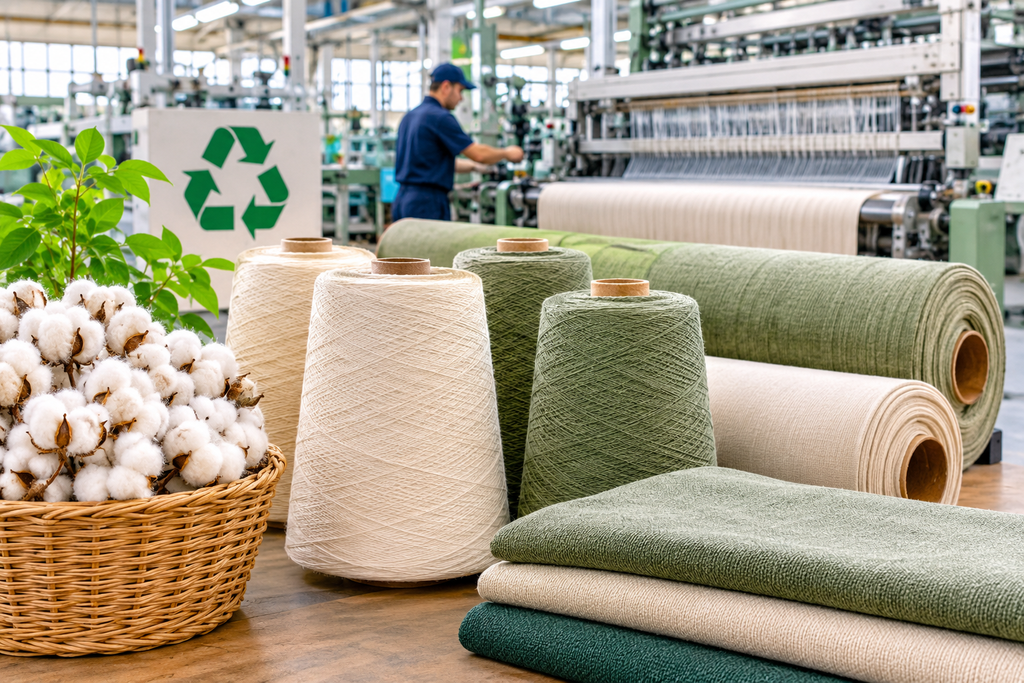
1. Organic Cotton
Organic cotton is grown under organic agricultural standards that restrict synthetic pesticides and fertilizers. It is widely used in T-shirts, shirts, baby clothing, bedding, and other everyday textile products.
Many fashion brands use organic cotton to support more responsible sourcing. However, its environmental performance still depends on factors such as irrigation, land management, processing, and transportation.
2. Recycled Polyester
Recycled polyester is generally manufactured from recovered plastic materials, including used PET bottles and polyester textile waste.
It can reduce demand for virgin polyester and help create new uses for recovered materials. It is commonly used in sportswear, jackets, bags and performance fabrics.
However, recycled polyester remains a synthetic fibre and can release microplastic fibres during washing. It should be considered one option within a broader sustainability strategy.
3. Hemp Fabric
Hemp is a natural fibre obtained from the hemp plant. It is used in clothing, home textiles, canvas and other textile applications.
Hemp can be attractive to manufacturers because it can grow with relatively low agricultural input under suitable conditions. Its final environmental impact also depends on processing and manufacturing methods.
4. Linen
Linen is produced from flax fibres and is valued for its durability, breathability and natural appearance.
It is popular in summer clothing, bedding, curtains and home furnishing products. Responsibly sourced flax and efficient processing can make linen an interesting option for sustainable textile collections.
5. Lyocell
Lyocell is a regenerated cellulose fibre commonly produced from wood pulp through a solvent-based manufacturing process.
Some producers use closed-loop systems that recover and reuse much of the processing solvent. Lyocell is widely used in shirts, dresses, denim blends, underwear and home textiles.
6. Recycled Cotton
Recycled cotton is made by recovering cotton fibres from pre-consumer manufacturing waste or post-consumer textile products.
It helps reduce the need for virgin cotton and gives discarded materials another purpose. However, mechanical recycling can shorten fibres, so recycled cotton is often blended with other fibres to achieve the required strength and quality.
7. Innovative Bio-Based Fibres
New textile innovations include fibres and materials developed from agricultural residues, algae, plant-based resources and other renewable feedstocks.
These technologies are attracting attention from researchers, manufacturers and fashion brands. Their long-term sustainability depends on production efficiency, scalability, durability and end-of-life options.
How Sustainable Manufacturing Is Transforming the Textile Industry
Sustainable textiles involve changes throughout the manufacturing process, not simply the selection of a particular fibre.
Water-efficient production: Modern dyeing and finishing technologies can reduce water consumption and wastewater generation.
Cleaner energy: Textile factories can improve their environmental performance by using renewable electricity, efficient machinery, and better energy management.
Responsible chemical management: Improved chemical selection, treatment systems and wastewater monitoring can reduce harmful releases into the environment.
Waste reduction: Manufacturers can reduce fabric waste through better cutting plans, improved production control and the reuse of leftover materials.
Circular manufacturing: Textile companies are increasingly exploring systems that collect, sort, reuse, and recycle textile products instead of sending usable materials to landfill.
These improvements can help manufacturers reduce resource consumption while maintaining product quality and production efficiency.
Sustainable Textiles in the USA and Europe
https://textileinfo.net/top-textile-manufacturing-countries/. The United States and European markets are important destinations for sustainable textile products.
In the USA, interest in recycled fibres, responsible sourcing, durable clothing and textile recycling is creating opportunities for brands and manufacturers. Businesses are also exploring repair, reuse and recycling models to reduce the amount of textile waste generated.
Europe is developing a stronger policy framework for sustainable and circular textiles. The European Union’s Strategy for Sustainable and Circular Textiles aims to make textile products more durable, repairable and recyclable by 2030.
The EU is also developing Digital Product Passport requirements for textiles under its Ecodesign for Sustainable Products framework. The European Commission’s current indicative timeline identifies Q4 2027 as the planned adoption period for the textile-specific delegated act. The exact requirements and implementation schedule remain subject to further legislative development.
For textile exporters and manufacturers supplying European buyers, following these developments is becoming increasingly important.
Challenges Facing the Sustainable Textile Industry
Despite its potential, sustainable textile production still faces several challenges.
Higher production costs: Some sustainable materials and advanced manufacturing technologies can require additional investment.
Recycling limitations: Blended fabrics containing different fibre types can be difficult to separate and recycle.
Supply chain transparency: Companies may struggle to verify the origin, processing methods, and environmental performance of materials across multiple suppliers.
Consumer awareness: Some buyers find it difficult to distinguish genuine sustainability improvements from misleading environmental marketing.
Production scalability: New fibres and recycling technologies must become commercially viable before they can replace conventional materials on a large scale.
Addressing these challenges will require investment, research, cooperation, and better industry standards.
How Textile Manufacturers Can Become More Sustainable
Manufacturers do not need to transform their entire operations overnight. A practical transition can begin with measurable improvements.
- Evaluate the environmental impact of existing production processes.
- Explore responsibly sourced and recycled raw materials.
- Improve water and energy efficiency.
- Introduce better wastewater and chemical management.
- Reduce fabric waste and production defects.
- Improve supplier transparency and traceability.
- Invest in durable product design and recycling opportunities.
- Monitor relevant certifications and market regulations.
Textile companies should also measure their progress and support environmental claims with reliable evidence.
The Future of Sustainable Textiles
The future of textiles will depend on how successfully the industry combines innovation, responsible sourcing and circular production.
Developments in fibre-to-fibre recycling, bio-based materials, digital traceability, automated manufacturing and resource-efficient dyeing could reshape the way fabrics are produced and consumed.
For fashion brands in the United States and Europe, sustainability is becoming an important part of product development and supply chain planning. For manufacturers in major textile-producing countries, it represents an opportunity to improve competitiveness and build stronger relationships with international buyers.
The transition will take time, but the direction is clear: longer-lasting products, more responsible manufacturing and better use of textile resources will play an increasingly important role in the global industry.
Conclusion
Sustainable textiles are more than a fashion trend. They represent an important shift towards responsible production, resource efficiency and a more circular global textile economy.
From organic cotton and recycled polyester to advanced recycling technologies, the industry has many opportunities to reduce waste and improve manufacturing practices.
Consumers, fashion brands, textile manufacturers and policymakers all have a role to play in this transition.
Building a more sustainable textile industry will require long-term commitment, practical innovation and cooperation across the global supply chain.
TextileInfo.net will continue exploring the materials, technologies, manufacturers, and market developments shaping the future of the global textile industry.