Introduction:
Smart Textile Factories: The Future of Automated Production. The global textile industry is entering a new era of manufacturing. Traditional production methods are increasingly being combined with artificial intelligence, robotics, connected machines, advanced sensors, and real-time data systems. These technologies are changing how textile manufacturers produce yarn, weave fabrics, dye materials, inspect quality, and manufacture garments.
This transformation is creating what the industry calls smart textile factories.
https://textileinfo.net/ai-in-textile-manufacturing/A smart textile factory uses connected technologies and automated systems to make production more efficient, accurate, flexible, and responsive to market demand. Instead of relying entirely on manual inspections and isolated machines, manufacturers can connect different stages of production and use real-time information to make better decisions.
For textile manufacturers in the United States and Europe, smart manufacturing offers opportunities to improve productivity, control operating costs, reduce material waste, and compete in an increasingly demanding global market.
But what exactly makes a textile factory smart? Which technologies are driving this transformation, and what will automated textile production look like in the coming years?
This article explores the technology, applications, benefits, challenges, and future of smart textile factories.
What Is a Smart Textile Factory?
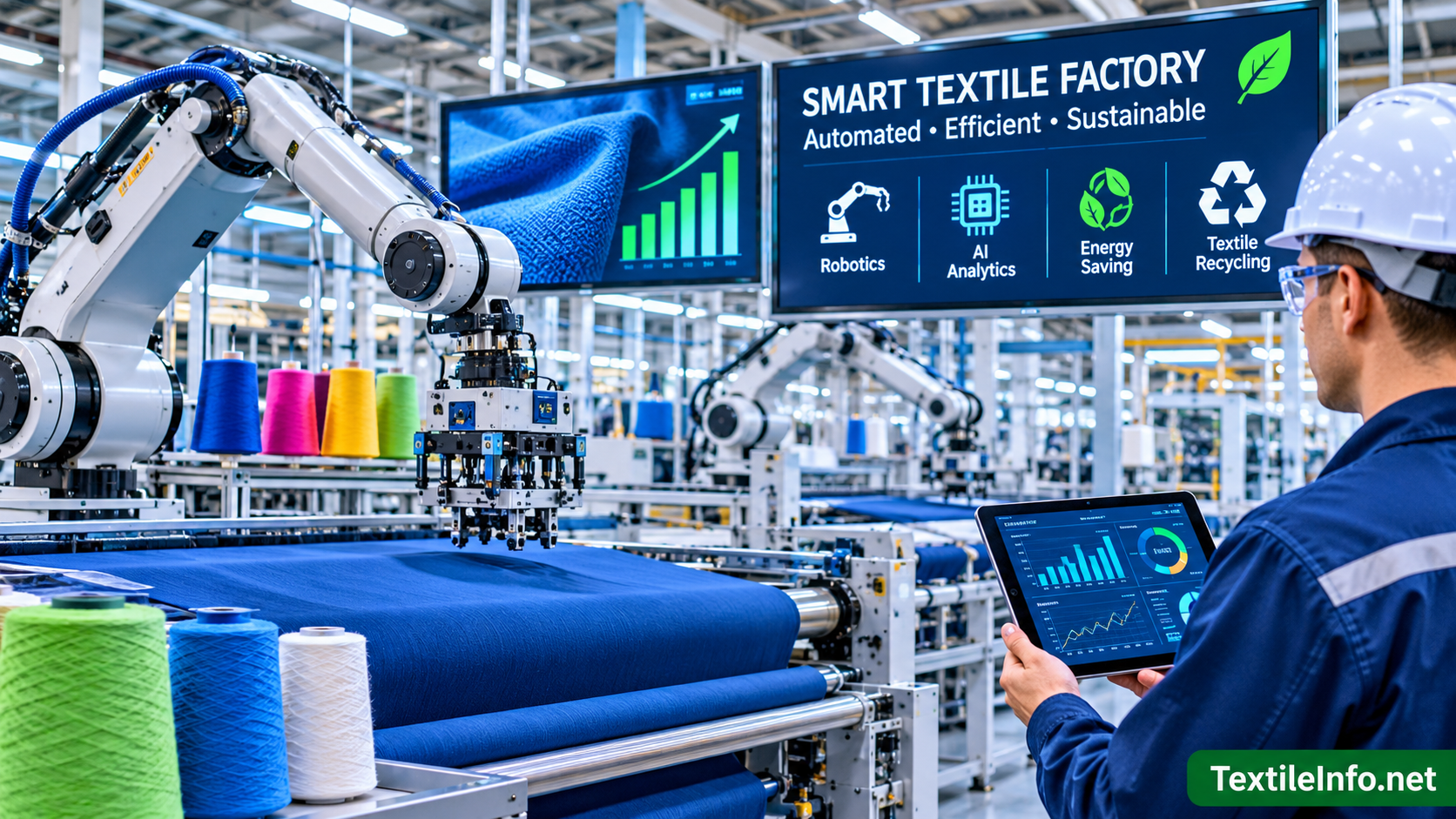
A smart textile factory is a manufacturing facility that uses digital technologies, automation, and connected equipment to monitor and improve production processes.
It combines traditional textile machinery with technologies such as:
- Artificial intelligence (AI)
- Internet of Things (IoT)
- Industrial robotics
- Machine vision
- Big data analytics
- Cloud computing
- Digital twins
- Automated material handling
- Smart production management systems
https://textileinfo.net/how-sustainable-fabrics-are-produced/In a traditional textile factory, machines may operate separately, and production information may be recorded manually. This can make it difficult to identify problems quickly or understand how one production stage affects another.
In a smart factory, connected machines and software systems share information. Production managers can monitor machine performance, track orders, identify defects, and adjust manufacturing schedules using current production data.
For example, sensors installed on a weaving machine can monitor vibration, temperature, and operating speed. If the system detects an unusual condition, it can alert maintenance staff before a major breakdown occurs.
The goal is not simply to replace workers with machines. It is to combine skilled people, intelligent software, and automated equipment to improve the entire manufacturing operation.
How Smart Textile Factories Work
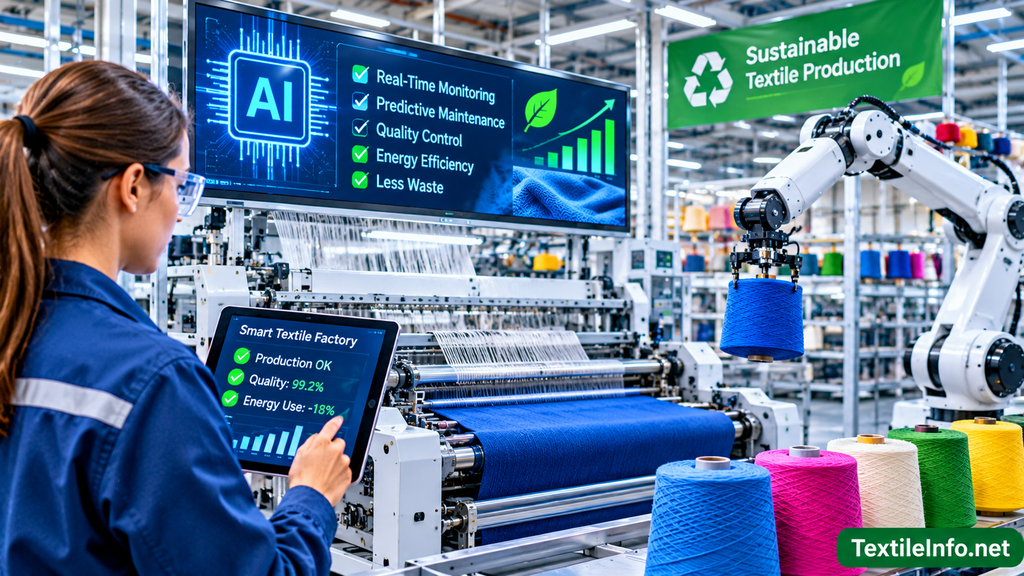
Smart textile manufacturing connects different production stages through digital systems. Each stage generates information that can help manufacturers improve the next stage.
A typical smart textile production workflow includes the following processes.
1. Automated Fibre and Yarn Production
The manufacturing process begins with raw fibres such as cotton, polyester, wool, and regenerated fibres.
https://textileinfo.net/sustainable-textiles-eco-friendly-fabrics-future/Modern spinning mills use automated machinery to manage fibre preparation, carding, drawing, roving, and spinning operations.
Sensors can monitor production conditions, while digital systems help track machine performance and yarn quality.
Potential advantages include:
- More consistent production conditions
- Improved machine monitoring
- Reduced production interruptions
- Better control of yarn quality
- Faster identification of operating problems
Automated material handling can also move packages and materials between production areas, reducing unnecessary manual movement.
2. Smart Weaving and Knitting
Weaving and knitting are important stages of fabric manufacturing.
https://textileinfo.net/global-textile-industry/Smart weaving machines and knitting systems can use sensors and digital controls to monitor production speed, machine condition, and selected quality parameters.
When a problem occurs, monitoring systems can notify operators so they can investigate it quickly.
Digital production records can also help managers compare machine efficiency, monitor order progress, and identify recurring production issues.
3. Intelligent Dyeing and Finishing
Dyeing and finishing operations require careful control of process conditions.
Smart manufacturing systems can monitor variables such as temperature, time, chemical dosing, water use, and machine performance.
Automated dosing equipment can help deliver more consistent quantities of chemicals and dyes according to a defined recipe.
Digital process monitoring can help manufacturers:
- Improve batch consistency
- Monitor water and energy consumption
- Reduce avoidable process variation
- Identify equipment problems
- Improve production records
Automation does not guarantee lower environmental impact. Results depend on the process design, chemicals, energy sources, and how effectively the system is operated.
4. Automated Fabric Inspection
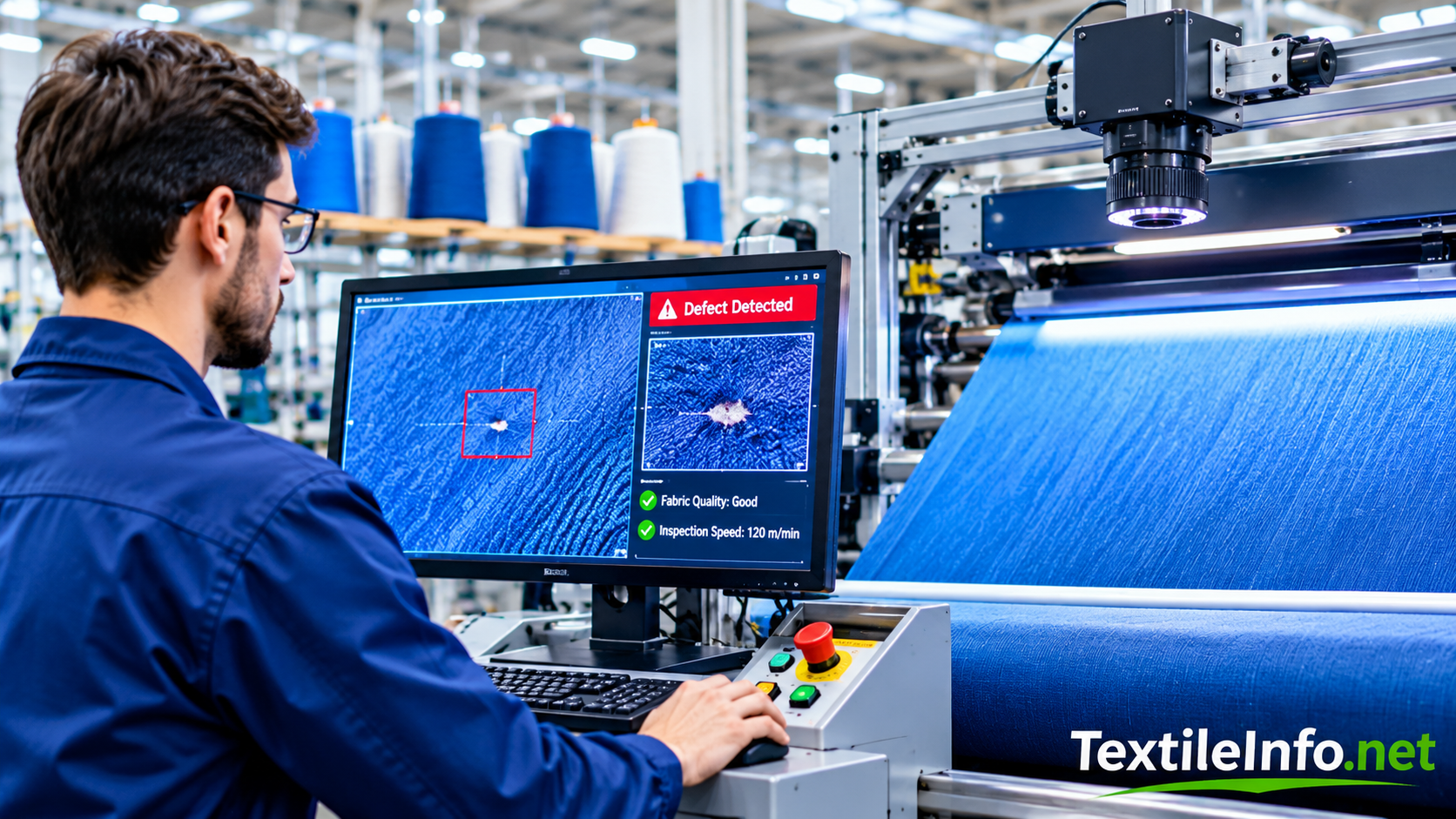
Fabric inspection is one of the most valuable applications of smart technology in textile manufacturing.
Traditional inspection often depends heavily on human visual checks. Skilled inspectors remain important, but automated machine-vision systems can provide additional support.
High-resolution cameras and image-processing software can identify visible fabric defects, including:
- Broken yarns
- Holes
- Stains
- Uneven patterns
- Weaving defects
- Knitting irregularities
- Colour variations
Artificial intelligence can analyse images and help classify defects according to their type and severity.
The information can help quality teams identify recurring problems and investigate their causes earlier in production.
5. Smart Garment Manufacturing
Automation is also changing garment production.
Modern garment factories can use automated fabric spreading, digital pattern preparation, computer-controlled cutting, material handling, and production tracking.
Robotic systems are being developed for selected material-handling and sewing-related tasks. However, flexible fabrics can be difficult for robots to manipulate, so complete automation of every sewing operation remains challenging.
Human workers continue to play an important role in garment assembly, quality checks, machine operation, and production supervision.
7 Technologies Powering Smart Textile Factories
Several technologies work together to create an intelligent manufacturing environment.
1. Artificial Intelligence (AI)
Artificial intelligence helps manufacturing systems analyse data, identify patterns, and support decisions.
In textile production, AI can be used for:
- Fabric defect detection
- Yarn quality analysis
- Production planning
- Demand forecasting
- Predictive maintenance
- Process optimisation
- Inventory management
For example, an AI-powered inspection system can analyse fabric images and identify patterns that may indicate a recurring production problem.
2. Internet of Things (IoT)
The Internet of Things connects physical machines and devices through sensors and communication networks.
In a textile factory, IoT sensors can monitor:
- Machine temperature
- Vibration
- Operating speed
- Humidity
- Energy consumption
- Production output
- Equipment operating conditions
This information can be displayed through dashboards, allowing managers and technicians to monitor factory operations.
3. Industrial Robotics
Industrial robots perform repetitive or physically demanding tasks with programmed movements.
Possible applications in textile and garment factories include:
- Material handling
- Fabric spreading support
- Automated cutting
- Packaging
- Palletising
- Selected sewing and assembly tasks
Robotics can improve consistency in suitable applications, but implementation depends on fabric characteristics, product design, production volume, and equipment cost.
4. Machine Vision
Machine vision uses cameras and image-processing software to inspect products and production conditions.
It is particularly useful for fabric inspection, colour monitoring, pattern checking, and identifying visible defects.
Machine vision can help quality-control teams inspect materials more consistently and collect information for process improvement.
5. Digital Twins
A digital twin is a digital representation of a physical machine, production line, or manufacturing system.
It can combine operational data with computer models to help engineers understand performance and test possible changes.
For example, a manufacturer could use a digital model of a production line to study how a change in machine speed might affect output and workflow.
Digital twins can support:
- Production planning
- Equipment monitoring
- Process simulation
- Maintenance planning
- Factory layout improvement
The value of a digital twin depends on the quality of its data and how closely the model represents the real manufacturing process.
6. Cloud Computing and Big Data
Smart factories generate large amounts of information from machines, sensors, quality systems, and production management software.
Cloud computing provides digital infrastructure for storing and processing information, while data analytics helps identify patterns and performance trends.
Manufacturers can use these systems to compare production lines, monitor orders, and share selected information between factories and business partners.
7. Automated Guided Vehicles and Material Handling
Automated guided vehicles (AGVs) and autonomous mobile robots (AMRs) can transport materials within suitable factory environments.
They may move yarn packages, fabric rolls, containers, and finished goods between production areas.
Automated material movement can reduce unnecessary handling and help factories organise internal logistics more efficiently.
Benefits of Smart Textile Factories
Smart manufacturing can create operational and commercial advantages when technologies are selected and implemented correctly.
1. Higher Production Efficiency
Connected machines and automated processes can help reduce avoidable delays and improve production coordination.
Managers can monitor output and identify bottlenecks without relying entirely on manual reports.
2. Better Product Quality
Automated inspection, process monitoring, and digital production records can help manufacturers identify defects and maintain more consistent quality.
Early detection can also reduce the cost of correcting problems later.
3. Reduced Manufacturing Waste
Better process control can help reduce defective fabric, unnecessary material use, and production mistakes.
Digital cutting systems can also improve fabric utilisation through more efficient pattern layouts.
4. Predictive Maintenance
Traditional maintenance often takes place after a machine breaks down or according to a fixed schedule.
Predictive maintenance uses equipment data to identify signs of possible failure.
For example, unusual vibration or temperature readings may indicate that a machine requires inspection.
This can help manufacturers plan maintenance before an unexpected breakdown interrupts production.
5. Improved Energy and Resource Management
Smart monitoring systems can track electricity, water, steam, and other resource consumption.
Production managers can use this information to identify unusually high consumption and investigate opportunities for improvement.
This is particularly relevant for energy-intensive processes such as spinning, dyeing, drying, and finishing.
6. Faster Production Planning
Digital production systems can provide information about machine availability, order status, material requirements, and delivery schedules.
This can help manufacturers coordinate production more effectively and respond to changing customer requirements.
7. Greater Supply Chain Visibility
Connected production and inventory systems can improve information sharing between manufacturers, suppliers, warehouses, and customers.
Better visibility can help companies identify delays and manage materials more efficiently.
Smart Textile Factories in the United States
The United States has a long history of textile manufacturing, particularly in technical textiles, industrial materials, nonwovens, protective fabrics, and specialised textile products.
American manufacturers face pressure to remain competitive while managing labour, energy, material, and operating costs.
Automation and digital manufacturing can support these objectives.
Important areas of opportunity include:
- Automated fabric cutting and inspection
- Robotics for material handling
- Digital production planning
- Smart inventory management
- Predictive machine maintenance
- Advanced technical textile production
- Data-driven quality control
For US textile businesses, smart manufacturing may also support more flexible domestic production and specialised manufacturing operations.
However, technology investment must be evaluated against the cost of equipment, installation, maintenance, workforce training, and expected production benefits.
Smart Textile Factories in Europe
Europe is an important centre for textile machinery, technical textiles, textile engineering, and advanced manufacturing.
Countries such as Germany, Italy, France, Spain, and the United Kingdom have textile businesses exploring different aspects of digital transformation.
European manufacturers are increasingly interested in technologies that can improve productivity while supporting resource efficiency, product traceability, and circular production.
Important developments include:
- Connected textile machinery
- AI-supported quality inspection
- Automated cutting and material handling
- Digital production management
- Resource monitoring
- Smart product information systems
- Digital manufacturing and supply chain integration
The European Commission’s work on the digital and green transformation of the textile ecosystem highlights the role of AI, IoT, automation, and data analytics in improving competitiveness and resource efficiency.
The adoption of these technologies is not uniform. Many companies are still developing their digital capabilities, especially smaller manufacturers.
Challenges of Implementing Smart Textile Manufacturing
Although smart factories offer significant opportunities, adopting new technology is not always simple.
1. High Initial Investment
Modern machinery, sensors, robotics, software, and network infrastructure can require substantial investment.
Smaller textile manufacturers may find it difficult to finance a complete factory transformation.
2. Shortage of Digital Skills
Smart manufacturing requires employees who understand both textile production and digital technologies.
Factories may need to train existing workers or recruit specialists in automation, data analysis, software, and machine maintenance.
3. Integration With Older Machinery
Many textile factories operate machines purchased years ago.
Connecting older equipment to modern digital systems can require additional sensors, communication devices, software, or machinery upgrades.
4. Cybersecurity Risks
Connected production systems can create cybersecurity risks.
Manufacturers need to protect production networks, business information, equipment controls, and customer data through appropriate security policies and technical safeguards.
5. Implementation Complexity
Installing technology without a clear production strategy can create unnecessary costs.
Companies should identify their most important manufacturing problems before investing in automation.
6. Human and Machine Collaboration
Not every textile process can be fully automated.
Flexible fabrics, complex garment designs, and frequent product changes can make some tasks difficult for robots.
The future of textile manufacturing will therefore depend on effective cooperation between skilled workers and automated systems.
How Textile Manufacturers Can Build a Smart Factory
A smart factory does not have to be created in a single investment.
Manufacturers can begin with smaller projects and expand as they gain experience.
Here is a practical implementation roadmap.
Step 1: Evaluate existing production.
Identify problems such as machine downtime, fabric defects, production delays, excessive material waste, or poor inventory visibility.
Step 2: Select a priority area.
Choose one process where digital monitoring or automation could deliver measurable improvements.
Step 3: Introduce suitable sensors and monitoring systems.
Start collecting useful production information, such as machine operating hours, output, energy use, and equipment condition.
Step 4: Connect production data.
Use suitable software to bring machine and production information together in a format managers can understand.
Step 5: Introduce automation gradually.
Consider automated inspection, digital cutting, material handling, or other technologies that address identified production needs.
Step 6: Train employees.
Ensure operators, supervisors, technicians, and managers understand how to use and maintain the new systems.
Step 7: Measure performance.
Compare results before and after implementation. Useful indicators include production output, defect rates, downtime, energy consumption, material waste, and delivery performance.
This gradual approach can help textile manufacturers manage investment risks and build digital capabilities over time.
The Future of Smart Textile Factories
Smart textile factories are expected to become more connected, data-driven, and flexible.
Industry developments point towards greater integration of automation, AI, and digital production systems rather than simply installing more individual machines.
Several trends are likely to influence the future.
1. AI-Driven Production Management
AI systems may increasingly support production scheduling, quality analysis, demand forecasting, and resource planning.
As manufacturers collect more reliable production data, these tools could help them make faster and more informed decisions.
2. More Advanced Robotics
Robotics is likely to expand in applications where tasks are repetitive, physically demanding, or suitable for standardised handling.
Developments in machine vision and flexible robotic gripping may make it easier to automate selected fabric and garment-handling operations.
3. Fully Connected Manufacturing Systems
Factories will increasingly connect machines, warehouses, quality-control systems, and production management platforms.
This could make it easier to track an order from raw material preparation through fabric production and garment manufacturing.
4. Digital Twins and Virtual Factory Planning
Digital twins may help manufacturers simulate production changes before implementing them on the factory floor.
They can also support equipment monitoring and maintenance planning.
5. Sustainable Smart Manufacturing
Digital systems can help factories measure and manage water, energy, chemicals, and material waste.
Combining automation with resource monitoring may support more efficient textile production.
6. On-Demand and Flexible Manufacturing
Digital production planning and automated cutting can help manufacturers respond to smaller orders and changing customer requirements.
This may reduce the need to produce large quantities of unwanted inventory, although the benefits depend on business models and production economics.
7. Greater Human and Machine Collaboration
The future smart factory is unlikely to be entirely operated by robots.
Skilled workers will continue to supervise production, solve complex problems, maintain equipment, and make decisions that require experience and judgement.
The strongest manufacturing systems will combine human knowledge with machine precision and digital information.
Frequently Asked Questions About Smart Textile Factories
What is a smart textile factory?
A smart textile factory uses connected machines, automation, sensors, AI, and digital systems to monitor and improve textile manufacturing processes.
What is Industry 4.0 in textile manufacturing?
Industry 4.0 refers to the integration of digital technologies, connected equipment, automation, and data-driven systems into manufacturing. In textiles, it can support spinning, weaving, knitting, dyeing, finishing, inspection, and garment production.
How does AI help textile factories?
AI can support fabric defect detection, production planning, predictive maintenance, quality analysis, inventory management, and process optimisation.
What is the role of IoT in textile manufacturing?
IoT connects machines and sensors so factories can collect and share information about equipment conditions, production output, temperature, vibration, and resource consumption.
Can robots replace workers in textile factories?
Robots can automate selected tasks, including material handling, cutting support, packaging, and some assembly operations. However, many textile and garment processes still require skilled human workers, particularly when handling flexible fabrics and complex products.
Are smart textile factories environmentally friendly?
Smart technologies can help manufacturers monitor resource use, reduce defects, and improve production efficiency. However, environmental benefits depend on how the technology is designed, powered, maintained, and operated.
Are smart factories affordable for small textile manufacturers?
Some technologies require significant investment, but smaller manufacturers can begin with targeted solutions such as machine monitoring, digital production records, and automated inspection in selected areas.
Which countries are leading smart textile manufacturing?
Germany and other European manufacturing centres have developed important textile machinery and Industry 4.0 capabilities. The United States and several Asian manufacturing economies are also investing in automation and digital production. Leadership varies by technology and manufacturing segment.
Conclusion
Smart textile factories are changing the way the global textile industry approaches manufacturing. By combining artificial intelligence, robotics, IoT sensors, machine vision, and digital production systems, manufacturers can improve operational visibility and make better decisions.
For textile businesses in the United States and Europe, these technologies offer opportunities to improve quality, manage costs, reduce waste, and build more flexible production systems.
However, successful digital transformation requires more than purchasing advanced machinery. Manufacturers need clear investment priorities, reliable data, trained employees, cybersecurity measures, and a practical plan for integrating new systems with existing production operations.
The future of textile manufacturing will not simply be about replacing traditional machines with automated equipment. It will be about creating connected factories where people, machines, and intelligent systems work together.
Smart textile factories represent an important step towards a more productive, flexible, and resource-efficient global textile industry.